
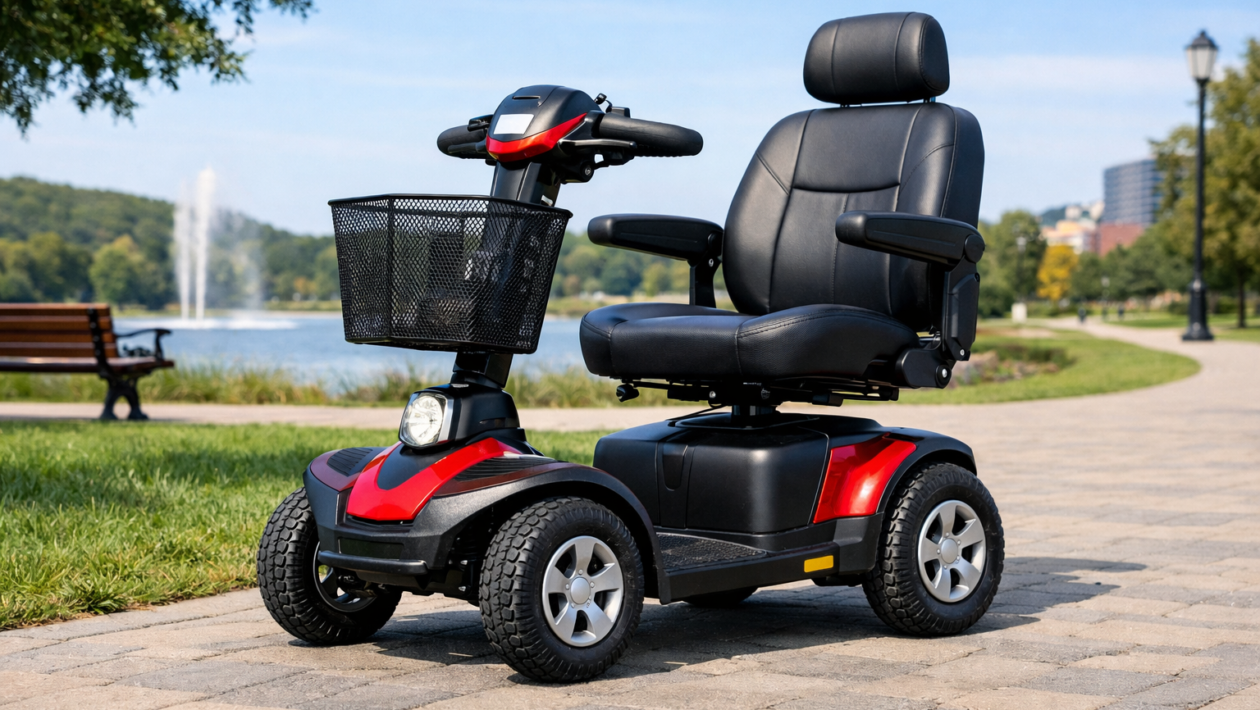
Key Takeaways
- Prioritize mobility scooters with flat-free tires if maintenance has become a barrier, especially for adults using part-time mobility support for errands, travel, and medical visits.
- Compare portable, folding, full-size, and luxury mobility scooters by weight capacity, turning radius, and battery range before focusing on looks or brand names.
- Check how a scooter handles real transportation needs—car trunk fit, cruise boarding, airport terminals, and shopping centers matter more than showroom features.
- Review ratings, repair history, and replacement parts access before buying used mobility scooters, because a low upfront deal can turn into repeated service costs fast.
- Ask direct questions about Medicare, insurance paperwork, and supplier requirements early, since mobility scooter approval often depends on documentation rather than diagnosis alone.
- Watch the 2026 shift toward flat-free, travel-ready electric scooter designs, because lower-maintenance mobility scooters are becoming the safer pick for adults managing arthritis, MS, and fatigue.
A flat tire used to be an annoyance. For people relying on mobility scooters to get through an airport, a cruise terminal, a long medical day, or even a grocery run, it can wreck the whole outing. That’s a big reason flat-free tires are gaining real traction in 2026—buyers don’t want one more maintenance headache, and they’re tired of equipment that sits unused because it feels fussy, heavy, or unreliable.
The shift is easy to spot among adults using part-time mobility support, especially those managing arthritis, MS, chronic fatigue, and other conditions that don’t play by a fixed schedule. On a good day, they may walk part of the trip. On a harder day, they need dependable electric scooter support that works without extra planning. Flat-free tire designs fit that reality. They cut down on repair worries, lower the odds of getting stranded, and make portable, modern, motorized transportation feel less like medical equipment and more like a practical tool for staying active—because that difference matters.
Why flat-free tire mobility scooters are suddenly in demand in 2026
Here’s the surprise: for part-time users, tire upkeep now knocks more scooters out of consideration than top speed. That shift says a lot about how adults are shopping for mobility scooters in 2026—less like medical equipment, more like practical transportation for errands, airports, cruises, and long museum days.
Rising demand from adults using part-time mobility support for travel and daily errands
For adults with arthritis, MS, or chronic fatigue, the new priority is flexibility. They don’t always need a chair. They need a scooter that works on the days walking drops off fast. That’s why searches for an easy to transport mobility scooter keep climbing, especially among buyers comparing portable, motorized models for car trunks and hotel rooms.
Why flat-free tires matter more now for portable, modern, motorized scooter buyers
Flat-free tires cut out one of the most annoying ownership problems—air loss, punctures, and surprise repair stops. For shoppers comparing a portable mobility scooter weight of 40 to 60 pounds, tire reliability matters because lifting, folding, and loading already take enough effort. Add in a tight portable mobility scooter turning radius, and a modern scooter becomes much easier to use in stores, terminals, and apartment hallways.
The practical shift from repair-heavy mobility scooters to lower-maintenance transportation
This is the real change. Buyers aren’t chasing luxury features first; they’re avoiding hassle. In practice, the strongest-selling mobility scooters now tend to offer:
- Flat-free tires for fewer service calls
- Portable frames for easier transport
- Predictable battery performance, including clear portable mobility scooter range per charge figures
That lower-maintenance setup works better for part-time use—especially for travelers who want dependable, adapted transportation without one more thing to fix.
What flat-free tires change for mobility scooters in real-world use
Over coffee, here’s the plain-English version: flat-free tires remove one of the most annoying failure points on mobility scooters, and that matters more in daily life than glossy showroom specs. For adults using a scooter part-time, fewer flats means fewer interrupted plans, fewer repair calls, and less worry before a long outing.
Better reliability for airport terminals, cruise ports, shopping centers, and medical visits
In practice, flat-free tires work better in high-traffic places—airport terminals, cruise ports, shopping centers, and clinic parking lots—where debris, expansion joints, and long indoor corridors can punish air-filled wheels. A shopper comparing electric and motorized models should also ask about portable mobility scooter range per charge, because tire drag and maintenance can affect how confidently a scooter handles a full day of transportation.
How flat-free tires compare with air-filled tires on comfort, traction, and upkeep
Air-filled tires can feel softer. That’s true. But flat-free designs usually win on upkeep, especially for people who don’t want to check pressure before every outing. Anyone comparing portable mobility scooter weight should read tire specs right alongside frame weight, because a light scooter with flat-free tires is often easier to load, store, and trust for routine use.
Where all-terrain and travel mobility scooters still need careful tire expectations
Not every all-terrain or travel scooter is built for gravel, wet grass, or rough pavement. That’s the catch. An easy to transport mobility scooter may be great for stores and terminals but still feel firm on broken sidewalks, and portable mobility scooter turning radius matters just as much as tire type in tighter indoor spaces.
Why accessories, parts, and service calls often drop with flat-free tire designs
Less upkeep, fewer surprises. That’s the appeal. Flat-free setups usually reduce demand for tire-related parts, emergency service visits, and small accessories like pumps or sealants—which is why more modern mobility scooters are moving this way in 2026.
How to shop mobility scooters with flat-free tires without buying the wrong model
At a cruise terminal, one traveler arrived with a sleek motorized scooter that looked perfect online. It didn’t fit the shuttle lift, couldn’t turn cleanly in the cabin hallway, — the battery tapped out before dinner. That’s the trap: buying mobility scooters by looks instead of daily use.
Flat-free tires help, but they don’t fix a bad match. Buyers need to sort scooter type, size, and transport needs before comparing deals, reviews, or brands.
Which scooter type fits best: portable, folding, full-size, or luxury mobility scooters
Portable models work well for part-time use, airports, and tight storage. A folding scooter suits adults who want an easy to transport mobility scooter, while full-size and luxury mobility scooters ride better outdoors but take more space—much more.
Weight capacity, turning radius, battery range, and transport fit inside cars or adapted vehicle setups
Numbers matter. Check:
- Portable mobility scooter weight: under 60 lbs in pieces is easier for caregivers
- portable mobility scooter turning radius: 33 to 40 inches works better in hotels and apartment halls
- Portable mobility scooter range per charge: 8 to 12 miles covers most errands, not full-day touring
- Lift or trunk fit in cars or adapted vehicle setups
Reviews, ratings, dealers, and direct online shop listings: what buyers should actually trust
Ignore star ratings alone. The useful reviews mention battery life, parts access, transport, and whether dealers handled service fast (that part tells the real story).
New vs used mobility scooters: when deals save money and when they create repair problems
Used scooters can look like smart transportation deals. But older batteries, missing accessories, and hard-to-find suppliers often turn a cheap scooter into a repair bill within 90 days.
Medicare, insurance, and out-of-pocket buying rules for mobility scooters in 2026
Medicare still covers some mobility scooters, but only when the paperwork is tight.
- Medical need comes first. Medicare Part B may cover a motorized scooter only if a clinician documents that walking aids like a cane, walker, or manual wheelchair won’t meet in-home mobility needs.
- Documentation decides approval. The usual file includes a face-to-face exam, a detailed written order, and notes showing why electric transportation inside the home is medically necessary—not just convenient for shopping or travel.
- Supplier status matters. Approved suppliers and dealers must follow Medicare assignment rules, and one missing form can push the timeline from 7 days to 30 or more.
Does Medicare still pay for mobility scooters and what documentation usually decides approval
In practice, the deciding issues are basic but strict: diagnosis, walking limits, upper-body strength, and whether the home can safely fit the scooter. Buyers comparing a portable mobility scooter weight spec with a power chair should remember that lighter, easy-fold models aren’t always the ones insurance prefers.
Why “free mobility scooter” offers often confuse buyers looking for real coverage
“Free” usually means billed through insurance, then limited by deductibles, co-insurance, supplier rules, or accessories that aren’t covered. That’s where confusion starts—and frustration follows fast for adults managing arthritis, MS, or fatigue.
How suppliers, dealers, and medical application paperwork affect the buying timeline
An easy to transport mobility scooter can be a better out-of-pocket fit for travel, but buyers should still ask about the portable mobility scooter turning radius and battery limits. One practical benchmark is portable mobility scooter range per charge, since range claims affect real transport plans, repairs, and long-day use.
It’s not the only factor, but it’s close.
Mobility scooter trends to watch as brands push flat-free, portable, and travel-ready designs
Buyers are noticing a shift.
What looked like a minor spec a few years ago is now shaping real purchase decisions. The answer is simple: mobility scooters are being built for lighter lifting, fewer maintenance headaches, and easier day trips.
Why electric mobility scooters are borrowing ideas from automotive, hybrid, and modern transport design
Across the category, electric and motorized scooter design is taking cues from automotive thinking—compact frames, better battery placement, and more stable handling. Even luxury and all-terrain models now borrow from hybrid vehicle logic: lower weight, smarter power use, and parts that reduce upkeep.
For shoppers comparing specs, the real questions are practical:
- portable mobility scooter weight affects whether it can go in a trunk without help
- portable mobility scooter turning radius matters in cruise cabins, elevators, and tight shop aisles
- portable mobility scooter range per charge decides whether a full outing feels realistic
What buyers are seeing from american and euro brands, from Golden Technologies to travel-focused companies
American — euro brands are pushing lighter frames, direct-fold seats, and more compact transport designs. Golden Technologies, Rascal, Veleco, and other travel-focused companies are showing how adapted, modern mobility can feel closer to personal transportation than old medical equipment.
Sounds minor. It isn’t.
Why one expert source says flat-free tires are becoming a deciding feature, not a bonus
Flat-free tires change ownership math—especially for adults who don’t want surprise repairs before a flight or family outing. One industry source, 1800wheelchair, notes that buyers now ask about tire type earlier because an easy to transport mobility scooter loses value fast if it’s sidelined by maintenance.
What this means for adults choosing a scooter for independence, energy conservation, and safer outings
For adults managing arthritis, MS, or chronic fatigue, the best scooter often isn’t the biggest. It’s the one they’ll actually use. That means checking weight, battery range, folded size, and tire type before getting distracted by deals, accessories, reviews, or flashy brands.
Frequently Asked Questions
Does Medicare still pay for mobility scooters?
Yes—Medicare Part B may cover mobility scooters as durable medical equipment if a doctor documents that the scooter is medically necessary for use inside the home. Approval usually depends on a face-to-face exam, a written order, and buying from a Medicare-enrolled supplier. It won’t cover a scooter just because walking long distances is tiring at the mall or airport.
How do I qualify for a free mobility scooter?
The honest answer is that truly free mobility scooters are rare. Most people qualify through Medicare, Medicaid, Veterans benefits, state waiver programs, or nonprofit help rather than getting one at no cost with no paperwork. If a company promises a free motorized scooter with no medical review, that’s a red flag.
What is the best mobility scooter on Consumer Reports?
Consumer Reports doesn’t always maintain the kind of up-to-the-minute mobility scooter reviews people expect, so shoppers shouldn’t rely on a single ranking. This approach works better: compare weight capacity, turning radius, battery range, portability, and service support, then match those specs to daily use. For part-time mobility support, a portable scooter often beats a bulky luxury model that barely fits in the car.
Which scooter is best for senior citizens?
There isn’t one best scooter for every older adult. For seniors with arthritis, chronic fatigue, or MS, the right mobility scooters are usually the ones that are easy to get on and off, simple to charge, and manageable during transport—not the flashiest electric scooter on the page. Three-wheel models can be easier indoors, while four-wheel scooters usually feel steadier outdoors.
The data backs this up, again and again.
What’s the difference between mobility scooters and power chairs?
Mobility scooters usually have a tiller and are better for users who can sit upright, steer with their hands, and transfer on and off with some control. Power chairs use a joystick and tend to work better for people with weaker shoulders, less trunk stability, or limited hand motion. In practice, scooters suit part-time use well, while power chairs often make more sense for heavier daily reliance.
Can mobility scooters be taken on airplanes or cruises?
Often, yes—but battery type, size, and total weight matter more than people think. Airlines and cruise lines each have their own rules, and lithium batteries get the closest scrutiny, so travelers should confirm battery specs and folded dimensions before booking. A portable mobility scooter with removable batteries is usually the least stressful option.
How far can a mobility scooter go on one charge?
Most mobility scooters for adults advertise somewhere between 8 and 20 miles per charge, though real-world range drops with hills, user weight, cold weather, and stop-and-go driving. That’s the part shoppers miss. If a scooter says 15 miles, planning around 10 to 12 is usually smarter.
Should I buy a portable scooter or a full-size all-terrain model?
Start with where the scooter will actually be used. If it needs to fit in a trunk, go on road trips, or handle doctor visits and family outings, a portable scooter is usually the better pick—even if it has less range and fewer luxury accessories. Full-size all-terrain scooters make more sense for long outdoor use, rougher surfaces, and people who don’t need to lift or transport the vehicle often.
Are used mobility scooters worth buying?
Sometimes—but only if the battery, tires, charger, — electronics are checked carefully. Used scooters can look like a bargain and still need a few hundred dollars in parts within weeks, especially if the batteries have been sitting. If there isn’t a clear service history, buyers should be cautious.
What features matter most when comparing mobility scooters?
Focus on five things: weight capacity, seat comfort, ground clearance, battery range, and transport method. Then look at smaller details—basket size, lighting, suspension, and available accessories—because those affect day-to-day use more than glossy marketing language. And ask one blunt question: can this scooter work with the body and energy level you have now, not the one you wish you had?
Flat-free tires have moved from a nice extra to a serious buying filter, and that shift makes sense. For adults who use mobility support part time, the biggest win isn’t flashy styling or one more accessory—it’s knowing the scooter will be ready for the grocery run, the terminal, the ship boarding line, or the specialist visit without a surprise flat changing the day. That kind of dependability matters.
It also changes the math on ownership. Lower upkeep, fewer tire headaches, and fewer service calls can make certain mobility scooters a smarter long-range purchase, even if the sticker price starts a bit higher. But tire type alone shouldn’t decide the sale. Fit still comes first: turning radius, transport weight, battery range, and whether the scooter actually matches the rider’s body, routine, and energy level.
Before buying, the reader should make a short checklist with five numbers: user weight, heaviest item they can lift, car trunk opening, longest usual outing, and tightest space at home. Then compare those numbers against two or three flat-free models and ask the seller one direct question—what repairs came up most often in the last 12 months? That answer will cut through the marketing fast.
For more great reading, visit our site and explore related topics.