
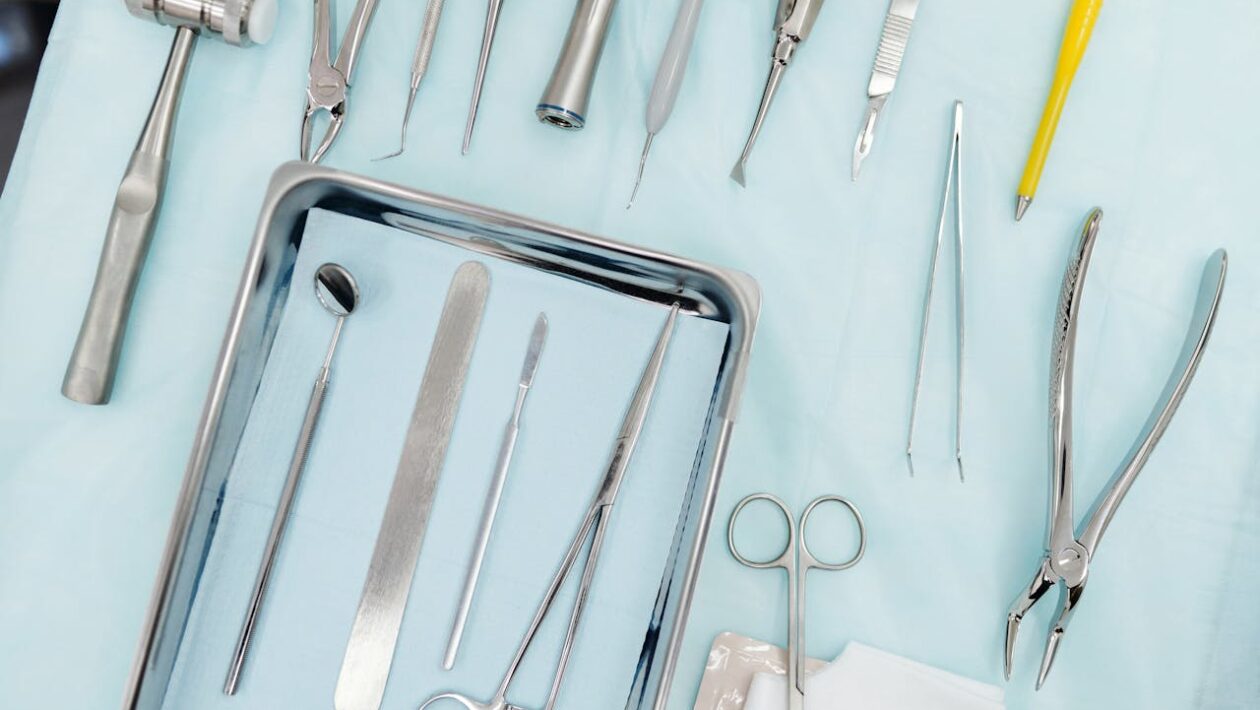
In the world of medical device manufacturing, there is no room for error. The stakes are as high as they get. A life-saving implant, a surgical instrument, or a diagnostic tool must be manufactured with a level of precision that is almost unimaginable in any other industry. A microscopic imperfection in a hip joint can lead to a premature failure; a tiny flaw in a surgical tool can have catastrophic consequences. The quality of these devices is not just a business metric; it’s a matter of patient safety.
This is where the science of metrology becomes the most critical function in the entire production process. To achieve this necessary perfection, manufacturers rely on the ultimate arbiter of precision. For medical device makers, coordinate measuring machines (CMMs) are not just a part of the quality lab; they are a fundamental part of the safety and compliance framework. They provide the objective, verifiable data that proves a component is ready to help save or improve a life.
Here’s a look at the critical role that CMMs play in the production of health devices.
Guarantees the Precision of Implants and Surgical Tools
Many medical devices, like orthopedic implants or cardiovascular stents, have incredibly complex, free-form geometries that are designed to perfectly mimic the human body. Traditional measurement tools like calipers and micrometers are simply incapable of accurately inspecting these intricate surfaces.
A CMM’s probe delicately touches hundreds of points across the implant’s complex, organic surfaces to build a precise 3D model. This digital replica is then compared to the original CAD file, verifying that every curve and contour matches the design with micron-level accuracy. This rigorous inspection process is the only way to guarantee that the implant will fit the patient’s anatomy perfectly, function flawlessly, and provide a durable, long-lasting solution.
A Cornerstone of FDA and ISO 13485 Compliance
The medical device industry is one of the most highly regulated in the world. Manufacturers must adhere to the strict quality system regulations set by government bodies. A core principle of these regulations is the need for process validation and complete traceability. You must be able to prove, with documented evidence, that your manufacturing process is capable of consistently producing parts that meet their specifications.
A CMM is the tool that generates this essential proof. The detailed, unbiased inspection reports from a CMM are a critical part of the documentation required to prove compliance to auditors and to achieve certifications like ISO 13485, the international standard for medical device quality management.
Validates Tooling and Molds: The First Step to Perfection
Many medical devices, particularly single-use instruments and diagnostic components, are made from high-performance plastics via a process called injection molding. The quality and consistency of a million identical plastic parts are entirely dependent on the near-perfect accuracy of the steel mold used to create them.
A CMM plays a critical “first article inspection” role in validating the mold itself. Before a mold is ever put into mass production, a CMM is used to meticulously measure all of its intricate internal cavities, cores, and features. By confirming that the tool itself is perfect, a manufacturer can prevent the massive waste and potential safety issues of producing thousands of out-of-spec parts. This “measure twice, cut once” principle is a key tenet of quality manufacturing.
Enables Mass Production with 100% Confidence
Once a device moves from the prototype phase to full-scale production, a CMM is crucial for ensuring that the thousandth part is just as perfect as the first. For critical, high-risk components, manufacturers will often integrate an automated CMM directly into the production line.
This allows for 100% inspection of every single part that is produced, rather than just a statistical sampling. A robotic arm can take a finished part directly from a CNC machine and place it in the CMM for a fully automated inspection routine. If any part deviates from the specification, it is immediately flagged and removed from the production line.
In an industry where the stakes are a person’s health and well-being, precision is everything. The coordinate measuring machine is the fundamental technology that provides the objective proof of quality, ensuring that every medical device that reaches a patient is as safe and effective as it can possibly be.