
There is a conversation that happens in dance studios across North America every single year, and it almost always catches families off guard when it arrives.
A dancer who has trained seriously for a decade or more reaches the age where the question of what comes next starts to feel urgent. College applications are on the table. Auditions for performing arts programs are being scheduled. Conversations with agents, casting directors, or professional companies are beginning or sparking thought. And somewhere in the middle of all of that, the dancer and their family arrive at the same hurdle.
How do you prove it?
How do you document ten years of serious competitive training, verified placements, legitimate wins, and real artistic development in a format that means something to someone who was not sitting in the audience for all of it? How do you hand a college admissions officer or a professional audition panel something that tells the true story of what this dancer has built, in a way they can verify rather than simply take on faith?
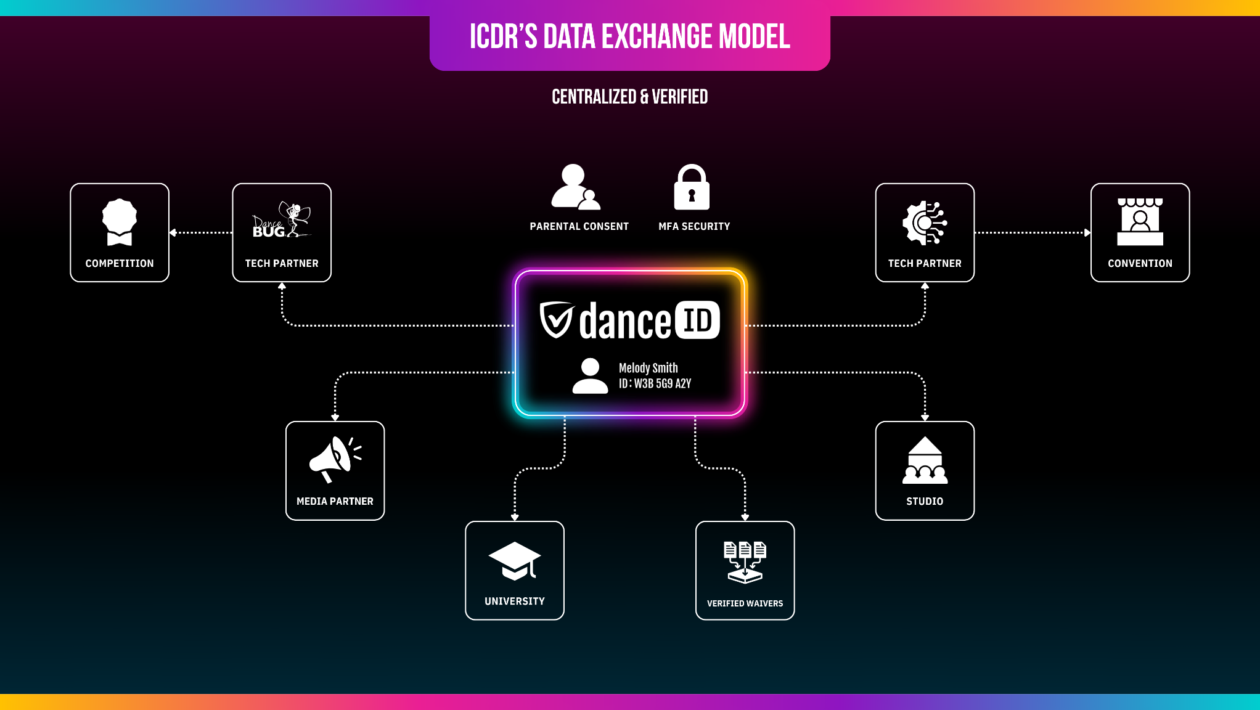
Right now, in most cases, the answer is that it is incredibly difficult. For years, the industry has relied on fragmented, separated tech stacks, making it nearly impossible to produce the kind of credible, portable, verifiable record that any equivalent investment in a mainstream athletic or academic pursuit would naturally produce. ICDR is changing that, and for teen dancers standing at the threshold of the next chapter, the timing could not matter more.
The Gap Between the Work and the Record
Competitive dance asks more of its serious participants than most people outside the world fully appreciate. A dedicated competitive dancer at the upper levels is training 20 to 40 hours a week. The commitment rivals what a serious athlete in any recognized sport brings to their development, and in many cases, exceeds it.
The difference is that the serious athlete in traditional sports has a centralized record that reflects their investment. There are rankings, verified results, documented placements, athlete stats, and a trail of evidence that tells the story of their development over time. That record travels with them. It carries weight in rooms where decisions are being made about scholarships and program placements.
The serious competitive dancer, by contrast, relies on a collection of trophies and a highlight reel. This is a structural gap caused by rapid growth in an industry where everyone has simply been doing the best they can with the tools available. Until now.
What a Verified Record Actually Changes
When a dancer has an ICDR record behind them, the conversation about their competitive history changes in a fundamental way.
Every result stored in their achievement profile was earned inside a verified system. Because the industry has long lacked a centralized verification tool, administrative inconsistencies have been a reality. ICDR changes this effortlessly: age is securely confirmed, and competition levels are validated against actual training history. The placement received means exactly what it says because the centralized system removes administrative guesswork, ensuring fair competition as a natural, adjacent benefit to verification.
For a college admissions officer looking at a performing arts applicant, that distinction matters. The difference between a dancer who claims ten years of competitive experience and a dancer who can point to a verified digital record of exactly that is the difference between a story and evidence.
The IMDb for Dancers (Built on Privacy and Safety)
Jamie Hodgins, Executive Director of ICDR, describes the long-term vision for the achievement profile with a comparison that immediately makes sense: think about what IMDb does for actors. It is a verified, searchable, comprehensive record of professional work that travels with a performer across their entire career. It sits outside the promotional relationship between the performer and the people trying to hire them.
Brian Friedman spoke of his experience when Instagram first launched their verified status symbol which he proclaimed he wants for all dancers who deserve the assurance that there is only one of them; because it’s true.
Photo: April 20, 2026 – ICDR Strategy Advisor interviewing industry icon, Brian Friedman on the importance of identity in a content driven dance world on a ZOOM call among peers to find safest next steps; together.
ICDR brings this equivalent to competitive dance, but with one critical difference: strict privacy and U18 compliance. In a heavily media-driven world, relying on a birthdate typed into a registration form is simply no longer sufficient protection for dancers under 18. The tech industry has seen massive fines, like YouTube ($170M) and Roblox ($35.8M), for misunderstanding global U18 data laws. Furthermore, the reality of digital vulnerability is stark. AI-generated material using children’s images increased 6,000% in a single year (2024–2025). As professional dancer Sophia Lucia bravely shared in a recent industry call, being a highly visible minor without media protections can lead to terrifying real-world consequences, such as stalkers legally purchasing performance media at events.
ICDR ensures that a dancer’s professional resume is gated and protected. The verification flow is simple and secure: families sign up, confirm identity using a government-issued ID, and receive a unique danceID. ICDR keeps only the secure verification record and instantly, permanently deletes the ID images. Because safety should never be a privilege, ICDR’s baseline danceID and core protections are free as a testament to their dedication to adopting this safer way of handling minor data. The profile belongs entirely to the dancer and their family, to be shared only when and with whom they choose. If and when they graduate, they can purge their data from one place, offering full control in systems not originally designed for this.
Building the Record Starts Today
The window to build a complete and verified competitive record starts the moment a dancer registers.
A dancer who registers with ICDR today begins building that record from today forward. The results they earn from this point on are documented, verified, and stored in a profile that travels with them. Kim McSwain, an industry veteran and studio owner, notes that the families who understand what a verified record will mean for a dancer’s options, two or three years from now, are the ones who are stepping forward today. The work is already being done; the question is whether the system is capturing it properly from the moment the dancer’s first danceID is assigned.
Beyond the Competition Floor
The value of a verified danceD record does not begin and end with professional dance ambitions. College applications for non-performing arts programs still benefit from documented evidence of serious commitment to an extracurricular pursuit. A verified competitive dance record communicates discipline, dedication, and the capacity to perform under pressure in a way that a self-reported activity list simply does not.
With over 35,000+ verifications already completed, a massive, industry-wide shift toward trust, safety, and transparency is underway. Every competition a teen dancer enters this season is a line on a resume. ICDR is the supportive, privacy-compliant layer that takes the incredible work a dancer is already doing and ensures it counts in every room where their future is going to be decided.
The trophies are real. The work is real. Now, the dance industry finally has a system that reflects that reality in a format that the world outside the dance studio can recognize, verify, and take seriously.