
Across the United States, the child-welfare system operates under a mandate to protect vulnerable children from harm—a mission that is both urgent and essential. But behind the scenes, within hospitals, investigative agencies, and courtrooms, an uncomfortable truth has been quietly taking shape. The system itself often carries built-in biases that disproportionately target certain families, especially those who are poor, marginalized, or navigating complex social circumstances. Decisions are frequently made under pressure, with incomplete information and without the depth of context that real-life families require.
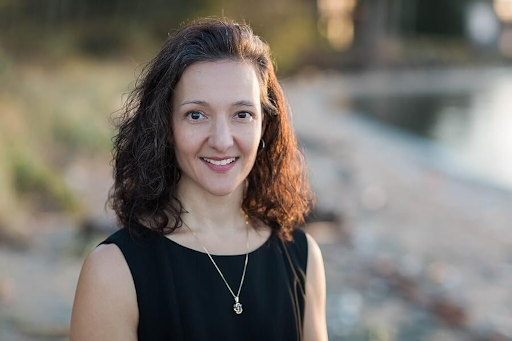
This hidden reality is something few medical professionals ever confront directly. But for Dr. Niran Al-Agba, a general pediatrician practicing for over twenty years, it has become impossible to ignore. Through her second-opinion medical review work in suspected child-abuse cases spanning twenty-three states, she has witnessed patterns of systemic bias with clarity, consistency, and concern. These patterns do not simply influence individual cases—they shape the fate of families.
Her work has brought to light a problem that is both widespread and rarely discussed: how bias quietly guides decisions long before families ever have a chance to defend themselves.
Where Bias Begins: Inside Medical Settings
Child-welfare involvement often starts with a single medical assessment. An emergency visit for an accidental fall, a bruise from typical toddler exploration, or a fracture with benign explanation can all be interpreted through the lens of suspicion. The initial interpretation becomes pivotal. Yet this interpretation is frequently made without the full picture. Physicians under pressure fill gaps with assumptions, and the urgency of potential harm amplifies the tendency to err on the side of caution.
In many cases, the families receiving the harshest scrutiny are those already experiencing social or economic hardship. Poverty becomes a proxy for risk. Limited access to healthcare is reframed as neglect. Stress-generated communication patterns are misinterpreted as evasiveness. And cultural differences in parenting styles are seen as red flags instead of variations in normal behavior.
Once these interpretations appear in medical notes, they carry immense weight. They set the tone for everyone who encounters the case afterward. From that moment forward, the family is not only evaluated based on what happened—they are evaluated based on who the system perceives them to be.
When Assumptions Turn Into Evidence
One of the most troubling realities in the child-welfare system is how quickly assumptions solidify into something resembling evidence. A physician noting that an injury “may be concerning” can, within hours, become a documented suspicion of abuse. Child abuse pediatricians—brought in to examine imaging and injuries—often rely on limited history, incomplete social context, and high-level academic interpretations rather than real-world pediatric patterns.
Even when the medical evidence is uncertain or ambiguous, the system tends to default toward the most alarming explanation. This is not because professionals lack care or compassion, but because the stakes are impossibly high and the fear of overlooking genuine harm is ever-present. Under these conditions, the human mind unconsciously favors the interpretation that feels safest for the evaluator—even when it is the most harmful for the family.
Dr. Al-Agba’s work often reveals that what was originally presented as a definitive sign of abuse is instead something far more nuanced: a common injury pattern, a medical condition with clear explanation, or a developmental stage that naturally includes bumps and bruises. Without someone willing to reexamine the evidence, families are left fighting conclusions that were never grounded in certainty to begin with.
The Weight of Bias on Marginalized Families
Systemic bias does not affect all families equally. Dr. Al-Agba’s caseload, drawn entirely from attorney referrals and word of mouth, reflects a consistent pattern: parents who are poor, single, immigrants, or people of color are disproportionately represented among the wrongly accused. They are more likely to be questioned harshly. More likely to be viewed as unreliable narrators of their child’s injuries. More likely to be judged by the conditions of their environment, rather than the facts of the case.
These families typically lack the resources to counter assumptions made early in the investigative process. They may not be able to secure immediate legal representation. They may not understand what aspects of their life are being interpreted negatively. They may not know how to challenge the medical narrative forming around them. And because child-welfare cases progress rapidly, they often lose the chance to correct misunderstandings before those misunderstandings become the basis for legal action.
Their silence is not voluntary. It is the silence of shock, confusion, and the overwhelming realization that their voice carries less weight than the system’s collectively reinforced assumptions.
How a Second Opinion Reveals the Truth Behind the Bias
Dr. Al-Agba’s work fills a gap that has quietly grown within the system. As a general pediatrician who treats children daily, she understands the spectrum of normal injuries, developmental stages, and benign medical conditions. She recognizes the difference between injuries that signal true concern and those that simply reflect the realities of childhood. Her evaluations consider not only imaging and charts, but context—something the system often fails to capture.
When she reviews a case, she asks the questions others didn’t think to ask. Did anyone consider the child’s medical history? Did the timeline make sense developmentally? Was the parent’s story consistent with real-world injury patterns? Were cultural or socioeconomic factors misinterpreted as risk indicators? Her analysis often uncovers that the original evaluation was influenced by bias, oversight, or a lack of contextual understanding.
The moment her findings are presented, the dynamic of the case changes. Attorneys gain clarity. Judges gain nuance. And families gain something they thought was lost: the ability to be heard again.
The Emotional Fallout of a Biased System
Beyond the structural implications, systemic bias leaves deep psychological scars on the families it touches. Parents who have done nothing wrong often find themselves consumed by fear. They question every interaction with their child. They worry about seeking medical care in the future. They lose trust in institutions they once believed in. For many, the experience becomes a form of trauma—long-lasting, pervasive, and corrosive.
Children, too, feel the ripple effects. Even short separations from caregivers create confusion and anxiety. The emotional heartbeat of the family changes. Stability fractures. And when the case ultimately reveals that the allegations were unfounded, the relief is overshadowed by the lingering memory of how quickly the system moved against them.
Dr. Al-Agba sees this emotional landscape in every case she takes. Her work is not only clinical—it is deeply human. In many ways, she serves as a stabilizing force for families navigating an overwhelming and biased system. Her clarity helps them understand what happened and why. Her transparency restores trust where trust was broken. And her honesty offers something rare in these cases: hope.
Exposing the Realities the System Struggles to Confront
The troubling realities within the child-welfare system are not easily solved. They are rooted in human psychology, institutional structure, and the intense pressure to protect children at all costs. Yet Dr. Niran Al-Agba’s work demonstrates that accuracy and compassion do not need to stand in opposition. Her evaluations bring balance to a system that has leaned too heavily toward suspicion, reminding professionals that real protection must begin with truth, not assumption.
By exposing the patterns of systemic bias that place innocent families at risk, she is doing more than correcting individual cases. She is revealing the need for a broader shift—one where medical interpretation incorporates context, where investigations acknowledge human complexity, and where families are no longer seen through the distorted lens of bias.
Her work challenges the system to evolve, not through confrontation, but through clarity. And as long as systemic bias continues to shape outcomes, her voice will remain one of the most needed—and most courageous—in the national conversation about child welfare.
This article is published on HealthSourceMag