
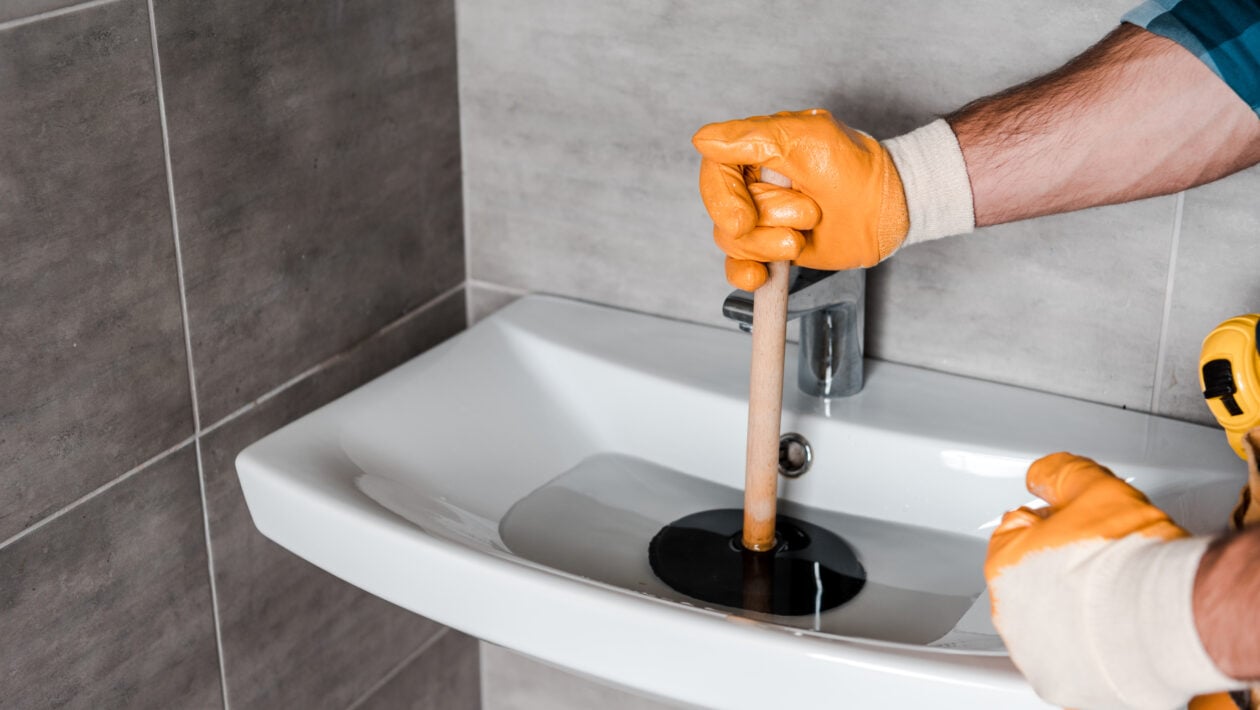
You pour the drain cleaner down the sink, wait the recommended time, flush it with hot water — and the sink still drains like it’s thinking about it. Frustrating doesn’t begin to cover it. If this sounds familiar, you’re not alone. And the answer isn’t to just buy a stronger cleaner.
The real problem is usually deeper than a bottle of chemicals can reach.
The Clog Isn’t Where You Think It Is
Most liquid drain cleaners work on organic buildup close to the drain opening — things like hair, soap residue, and toothpaste. But clogs don’t always live near the surface. If the blockage is sitting further down the drainpipe or at a bend in the P-trap, the cleaner may never even reach it in full concentration.
By the time the chemical solution travels that far, it’s already diluted. It might eat through some of the buildup, but not enough to actually clear the passage.
Buildup That Chemicals Can’t Break Down
Not all clogs are created equal. Some are the result of:
- Mineral deposits from hard water, which calcify on pipe walls over time
- Soap scum that has hardened into a near-solid layer
- Grease or wax from certain grooming products
- Foreign objects like small jewelry or toothpaste caps
Liquid drain cleaners are formulated to dissolve organic material. They won’t do much against mineral scale or a physical obstruction. If your pipes have hard water buildup coating the interior walls, the drain may continue to run slowly regardless of how many treatments you apply.
Your Pipes Might Be Telling You Something Else
Slow drainage that keeps coming back after treatment isn’t just a clog issue. It can be a sign of:
- Venting problems — If your drain vent is blocked, air can’t flow properly through the system, which creates resistance and slows drainage
- Partial pipe collapse or misalignment — Older pipes can shift, crack, or corrode, creating narrow spots where debris collects
- Main line issues — If multiple drains in your home are slow, the problem may be in the main sewer line, not just the bathroom sink
These aren’t problems a bottle of cleaner will solve. They require a proper diagnosis.
Why Repeated Chemical Use Can Make Things Worse
Here’s something worth knowing: repeatedly using harsh chemical drain cleaners can actually damage your pipes, especially if they’re older or made from PVC. The caustic ingredients can weaken pipe walls over time, which creates a bigger and more expensive problem down the road.
If you’ve already used drain cleaner two or three times with little improvement, stop. More chemical isn’t the answer — and it may be causing harm you can’t see yet.
When to Call for Professional Drain Cleaning Services
If your sink continues draining slowly after one or two chemical treatments, it’s time to bring in professional drain cleaning services. A licensed plumber has access to tools that actually work:
- Drain snaking to physically break through and remove blockages
- Hydro jetting to blast away buildup from pipe walls with high-pressure water
- Camera inspection to see exactly what’s going on inside your pipes
These methods don’t just mask the problem — they fix it. And they do it without the risk of pipe damage that comes from repeated chemical use.
The Bottom Line
A slow-draining sink is more than an annoyance. It’s a sign that something in your plumbing system needs attention. Drain cleaner is a temporary fix at best, and for many types of clogs, it doesn’t work at all.
If you’ve tried the over-the-counter solutions and you’re still staring at a sink full of standing water, it’s time to get to the actual root of the problem. Professional drain cleaning services can diagnose the issue accurately and clear it the right way — the first time.