
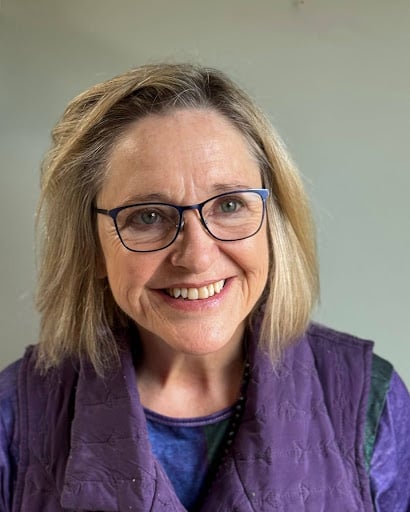
Most architects spend their careers designing buildings that meet code, stay on budget, and look good in photographs. Joy Cuming spent years doing the same—until a single project and a devastating personal loss forced her to confront a question most designers never ask: What if the spaces we create are quietly undermining the health and well-being of everyone inside them?
Today, Cuming leads the Aline Alliance for Vital Environments, an initiative that challenges conventional design by integrating ancient principles of sacred geometry, Vedic architecture, and contemporary environmental science. Her work operates on a premise that sounds radical in modern construction but is grounded in centuries of practice: that buildings are not neutral containers, but active participants in human health.
“The pattern I see repeatedly is that people are living and working in environments that don’t support who they are,” Cuming explains. “Most people feel it, but they don’t always recognize the source. It shows up as fatigue, disconnection, or a quiet sense that something is missing.”
The Turning Point
Cuming’s pivot began with an invitation to design a home using Sthapatya Veda, an approach rooted in Vedic architecture that considers orientation, proportion, and subtle energies to build according to natural law. The project opened her eyes to a possibility she had never considered in her formal training: that buildings could do more than function well—they could actively support harmony and well-being.
Around the same time, she invited a close friend and artist to collaborate on a mosaic for the project. Together, they imagined a future creating uplifting spaces around the world. But shortly after, her friend was diagnosed with an aggressive brain tumor and passed away. Her family believed environmental toxicity in the urban environment where she lived may have contributed to the illness.
“That loss stayed with me,” Cuming says. “It transformed my curiosity into something more urgent.”
The tragedy became a catalyst. Cuming began focusing on the transformation of damaged and contaminated sites into places of beauty and restoration. She saw firsthand that the places we build—and the environments we tolerate—have profound consequences for life itself.
Beyond Sustainability Checklists
Cuming’s approach diverges sharply from mainstream architecture and even from much of the green building movement. She argues that current solutions prioritize efficiency, compliance, and surface aesthetics, while missing a fundamental truth: space is not neutral.
“Even sustainability can become a checklist rather than a deeper inquiry into how a place actually feels and functions,” she notes. “What’s missing is the understanding that the environments we create shape how we think, feel, and relate.”
Her methodology integrates principles from Vastu, sacred geometry, and BioGeometry—a discipline developed by Dr. Ibrahim Karim that explores how form, proportion, and subtle energy relationships influence spatial quality. Cuming translates these concepts into contemporary contexts, working across three layers: the individual, the place, and the larger system.
When those three are aligned, she says, a space begins to feel coherent, supportive, and alive.
From Personal Space to Global Connection
Cuming’s clients—individuals, communities, and townships in transition—often report transformation that extends beyond aesthetics. When a space aligns with natural principles, people experience greater ease, clarity, and connection. Some shift their daily rhythms or relationships simply by inhabiting more supportive environments.
But Cuming’s vision extends beyond individual projects. Through Gifts to Gaia, a global exchange initiative, she invites participants from different cultures to pair up and commit to changing one small thing in how they relate to the Earth. Over time, they reflect on how that shift affects their awareness and their connection to one another.
“It’s a simple framework, but it reveals how meaningful change begins with attention and relationship,” Cuming says.
The Bigger Picture
At a societal level, Cuming sees extraordinary potential in places most people overlook: post-industrial and contaminated sites that carry the imprint of extraction and neglect. When principles drawn from nature, geometry, and energetic coherence are applied, these sites can be transformed into environments that restore and inspire.
“The bigger picture is a shift from creating spaces that deplete life to creating places that actively support it,” she explains. “This has implications not just for environmental health, but for social well-being, creativity, and our collective sense of purpose.”
Her work suggests a model that moves from extraction to regeneration, from isolation to interconnectedness—a reframing of what buildings can and should do.
An Urgent Invitation
In a moment marked by climate instability, biodiversity loss, and increasing pressure on natural systems, Cuming offers a message that is both practical and profound: even the smallest conscious act can begin to restore our relationship with the Earth.
“The scale of these challenges can feel overwhelming, even paralyzing,” she acknowledges. “But what if the way forward isn’t through grand gestures alone, but through small, daily acts carried out with awareness and shared intention?”
She believes reconnection doesn’t always begin with large solutions. Sometimes it starts with one small, intentional act—and the awareness it creates. A shift in how we live in relationship to our immediate environment. A willingness to pay attention.
For Cuming, the urgency is real. But so is our capacity to respond, starting now, exactly where we are.