
A small bump on your eyelid can cause a surprising amount of trouble. It may sting when you blink, make your eye water or leave you wondering whether you should keep working at a screen. The tricky part is knowing when a little home care is enough and when the problem needs a closer look.
Most styes improve without complicated treatment, but the way you handle one matters. Squeezing the lump or trying random eye products can make irritation worse. By understanding what causes a stye, which remedies are worth trying and what warning signs to watch for, you can make a calmer, more informed decision about your next step.
Recognise the Early Signs
A stye usually appears as a tender, red lump near the edge of an eyelid. It often develops when an oil gland or eyelash follicle becomes blocked and inflamed, sometimes following a bacterial infection. You might notice swelling, soreness, a gritty feeling or a small yellowish spot at the centre.
The location offers a useful clue. An external stye develops close to an eyelash, while an internal stye forms deeper inside the eyelid and may cause more widespread swelling. However, not every eyelid lump is a stye. A chalazion, for example, is often less painful and develops when an oil gland becomes blocked.
If you are unsure what you are seeing, a guide to stye treatment in Singapore can help you understand common symptoms and available treatment approaches. Recognising the difference between a minor stye and another eyelid condition helps you avoid treating the wrong problem.
Start With Warm Compresses
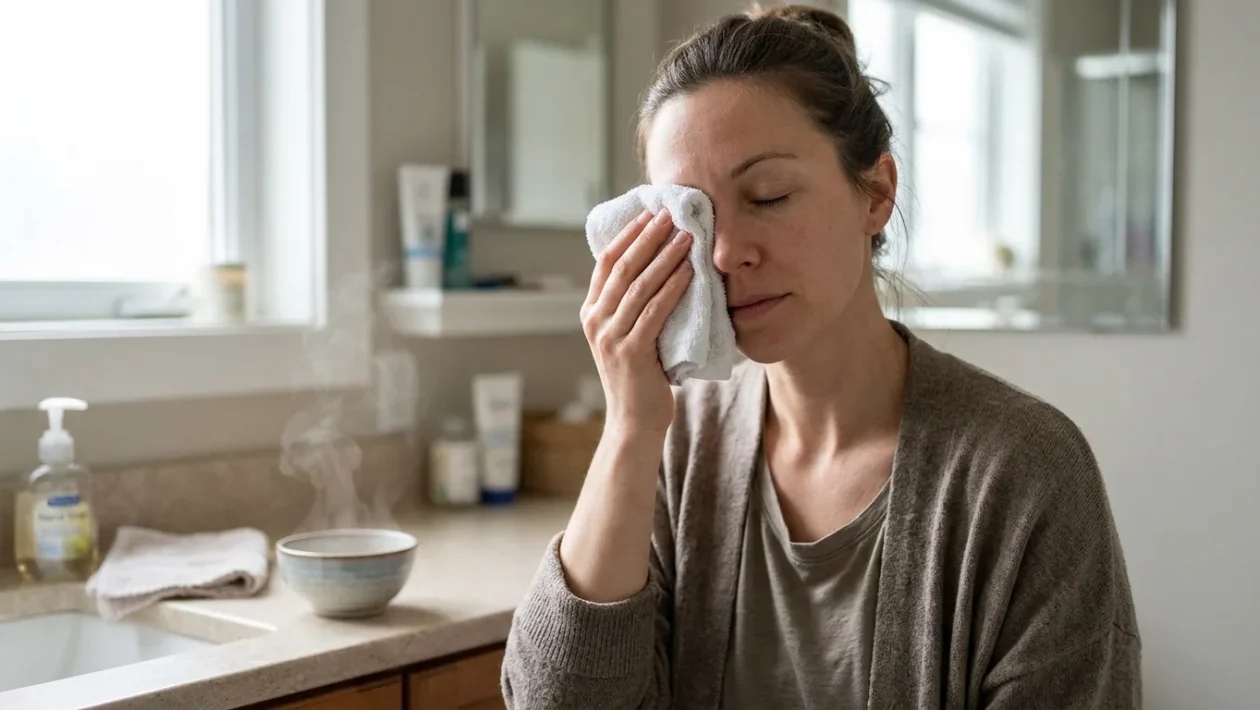
A warm compress is usually the first step for a straightforward stye. The gentle heat helps soften material trapped in the affected gland, encouraging natural drainage and easing discomfort. It will not necessarily make the bump disappear overnight, so consistency matters more than applying intense heat.
Wash your hands, soak a clean cloth in comfortably warm water and place it over your closed eyelid for 10 to 15 minutes. Repeat this three or four times daily, reheating the cloth as needed. The cloth should feel soothing rather than hot enough to burn your skin.
Here is an important trade-off: applying a hotter compress does not mean faster healing. Excessive heat can injure the delicate eyelid, while pressing firmly may increase inflammation. Gentle warmth, repeated regularly, is the safer approach.
Avoid These Costly Mistakes
When a stye becomes noticeable, it is tempting to squeeze it like a spot. Resist that urge. Forcing the contents out can damage surrounding tissue and potentially spread infection, turning a small problem into a more painful one.
Avoid these common mistakes while the eyelid heals:
- Popping the lump: Allow it to drain naturally rather than forcing it open.
- Using contact lenses: Switch to glasses until the irritation has settled and normal lens use is comfortable.
- Applying eye make-up: Pause mascara, eyeliner and other products around the affected eye.
- Sharing towels: Use a clean cloth each time and avoid sharing items that touch your face.
- Trying leftover medication: Eye drops and ointments are not interchangeable, and some may be unsuitable for your condition.
These precautions also help you judge whether your routine is working. If the swelling gradually reduces and tenderness eases, continue gentle care. If the lump becomes more painful, spreads or fails to improve, it is time to reconsider the plan.
Know When to Seek Help
A typical stye often starts improving within several days, although complete healing can take a week or longer. The key is the direction of change. A bump that becomes smaller and less tender is different from one that grows, becomes increasingly painful or causes swelling across the eyelid.
Arrange an eye assessment if the stye is not improving after a few days of careful home care, persists for more than a week or two, keeps returning, or affects your vision. Seek prompt medical attention if you develop fever, spreading redness, severe pain, pain when moving the eye or changes in vision. These symptoms may indicate a problem beyond a simple stye.
A useful decision rule is to focus on both severity and progress. Mild symptoms that steadily improve can usually be monitored with warm compresses. Symptoms that worsen, interfere with vision or spread beyond the original lump should not be managed with home remedies alone.
Understand Professional Treatment
If a stye does not settle, an eye-care professional can examine the eyelid and determine whether another condition is responsible. This matters because a persistent, relatively painless lump may be a chalazion rather than an active stye, and the two conditions can require different approaches.
Treatment depends on the findings. A clinician may recommend continued warm compresses, prescribe medication when there is evidence of a relevant infection, or consider a minor procedure to drain a persistent lesion. Antibiotics are not automatically necessary for every stye, and medication should be selected following an appropriate assessment.
Professional removal is not the first step for every eyelid bump. In many cases, time and careful home care are enough. If a procedure is appropriate, your clinician can explain its benefits, risks and aftercare before you decide how to proceed.
Reduce the Chance of Recurrence
A stye can return, particularly if the eyelid margins remain irritated or oil glands repeatedly become blocked. A simple daily routine can help reduce avoidable triggers, especially if you often experience crusting, oily eyelids or inflammation around your eyelashes.
Clean your hands before touching your eyes, remove make-up thoroughly before bed and avoid rubbing your eyelids when they feel itchy. If you regularly experience eyelid irritation, ask an eye-care professional whether you may have an underlying condition such as blepharitis that needs separate care.
For a persistent or recurring problem, it can also help to review the advice available from Eye Max Centre and discuss your symptoms with an appropriate eye-care professional. Keep track of when the lump first appeared, whether it is painful and whether the swelling is changing. Those details can make an assessment more useful.
A stye may be small, but that does not mean you should ignore what your eyelid is telling you. Start with gentle warmth, avoid squeezing the bump and watch how symptoms change over time. When the problem worsens, keeps returning or affects your vision, professional advice is the sensible next step. With the right care and a little patience, you can give your eyelid a better chance to heal comfortably.