
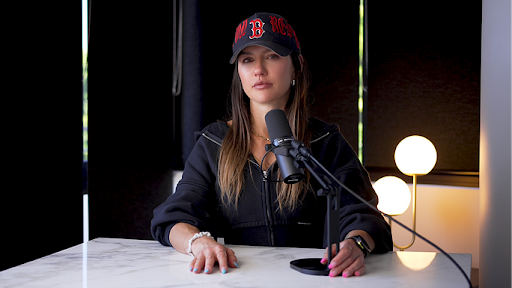
There is a distinction that the fitness industry has never had much interest in making. It’s commercially inconvenient, difficult to photograph, and doesn’t compress well into a before-and-after. But Vanja, founder of Moves Method and movement educator to over 180,000 students across 45 countries, makes it constantly — with every new client, in every assessment, at the start of every conversation about what someone actually wants from their body.
The distinction is this: being fit and being able to move are not the same thing. They overlap occasionally. They’re often found in completely different people. And the one the fitness industry has been selling for decades is, in her view, the less important of the two.
What fit actually means in most gyms
In the language of mainstream fitness, fit means performing well on a narrow set of metrics. Cardiovascular endurance. Muscular strength. Body composition. The ability to sustain output across a defined protocol — a timed run, a lifting total, a class that ends when the instructor says it ends. These are real qualities. They’re also, Vanja argues, qualities that can be developed in a body that is simultaneously losing the ability to move through its own full range, access its own positions, and function outside the specific demands it’s been trained for.
She sees this constantly. The client who runs half marathons and can’t touch their toes. The lifter with an impressive total who can’t get off the floor without using their hands. The gym regular who has trained five days a week for a decade and has the cardiovascular markers of someone twenty years younger, and the hip mobility of someone twenty years older.
“Fit is a performance category. It tells you what someone can do inside the test. It says nothing about what they can do outside it. Most people are passing the test and failing everything the test doesn’t measure.”
Fitness, in the way most people pursue it, is highly specific. The body adapts to the demands placed on it and becomes very competent within those demands. The problem is that life is not a protocol. It doesn’t end when the instructor says it ends. It asks for things the training session didn’t prepare for, at angles the program didn’t include, in positions the gym told people to avoid.
What it means to actually be able to move
Movement capacity, in Vanja’s framing, is something different and something more demanding. It’s the ability to access the full vocabulary of positions the human body was designed to produce — not just the ones a program rehearses, not just the ones that feel comfortable, but the deep squat, the hang, the floor transition, the loaded rotation, the end-range hip position, the overhead that goes all the way overhead — and to produce force from all of them, under fatigue, in unrehearsed combinations.
A person who can move, in her definition, doesn’t need to think about how they’re going to get up from the floor. They don’t need to brace before picking something up at an awkward angle. They don’t need to mentally prepare for a position their body hasn’t seen before. Their physical operating system has enough range, enough strength across that range, and enough neurological familiarity with varied positions that the unexpected doesn’t become an event.
“Movement capacity is what’s left when you take away the controlled environment. Strip out the gym, the program, the warm-up, the familiar equipment — what can the body actually do? That’s the real number. Most people have never tested it.”
The distinction matters because these two qualities — fitness and movement capacity — require different things to build, deteriorate for different reasons, and produce different bodies over a lifetime. Someone can be highly fit and functionally restricted at the same time. The two aren’t in conflict. They’re just measuring different things, and most people have spent their entire training lives optimising one while the other quietly erodes.
Why the gap opens
The gap between fitness and movement capacity doesn’t open dramatically. It opens the way most physical decline opens — gradually, through accumulation, through the slow compounding of small omissions that each seem individually reasonable.
The program that doesn’t include deep squat work because the coach said the knees. The overhead pressing that gets replaced with incline work because the shoulder has always been a bit touchy. The floor-based movement that never makes it into the session because there isn’t time, and it feels like accessory work anyway. The rotation that gets avoided because the back incident from years ago left a standing instruction to be careful.
Each omission is defensible. Together, they build a body with significant gaps between what it can perform under controlled conditions and what it can actually do when conditions stop being controlled.
“The gap isn’t built in one decision. It’s built in ten years of small ones. Every position that got skipped, every range that got protected instead of trained, every movement that seemed optional — that’s the body waiting at the other end.”
By the time most people notice the gap, it’s been open for years. The fitness has continued accumulating. The movement capacity has been quietly declining. And the moment that makes the gap visible — the injury that happens doing something ordinary, the position that suddenly isn’t accessible, the physical demand that the body should be able to meet and can’t — feels sudden when it’s actually the predictable outcome of a long, gradual divergence.
The assessment that changes the conversation
When a new client comes to Moves Method, the first thing Vanja does is a full movement analysis. Twelve movements. Assessed for range, control, strength at end range, and the quality of transition between positions. It’s not a fitness test. It doesn’t measure output or endurance or how much someone can lift. It measures how much of their own body they can actually access.
The results, she says, are consistently more confronting than clients expect. The person who has trained seriously for fifteen years and can’t sit in a deep squat without heels rising and torso collapsing. The athlete whose shoulder stops rotating before it reaches the positions daily life will demand of it. The lifter whose spine won’t flex or extend under load because the program never asked it to.
“Most people come in knowing something is off. The assessment just shows them exactly where. And it’s almost never where they thought it was. The body is very good at hiding its restrictions behind the movements it’s kept strong.”
What the assessment does is make the distinction concrete. This is what fit looks like. This is what being able to move looks like. Here is where they overlap in your body, and here is the gap. After the assessment, the gap stops being abstract.
What closing the gap actually requires
The path from fit-but-restricted to genuinely mobile isn’t about doing less of what someone has been doing. It’s about adding the dimension that’s been missing. End-range loading. Progressive exposure to the avoided positions. Strength work that goes to the bottom of the squat, to full shoulder suspension, to rotation under tension, to the floor and back up in every direction.
It takes longer than a fitness program. It requires a different kind of patience — not the patience of waiting for the number on the bar to go up, but the patience of training positions that feel wrong before they feel right, of building capacity in ranges where the body currently has none, of watching the nervous system slowly revise its threat assessment and open territory it had held locked for years.
“Closing the gap isn’t complicated. It’s just slower than people want it to be, and it requires going to places the training has been avoiding. The fit body already has the engine. It just needs to learn to drive the whole car.”
The clients who make this shift describe a specific kind of change that fitness alone never delivered. Not just strength, not just range, but a quality of physical confidence that comes from knowing the body can handle what it encounters. The unrehearsed position. The unexpected demand. The movement that didn’t come from a program. That confidence, Vanja says, is what movement capacity actually feels like from the inside — and it’s entirely different from the confidence that comes from performing well on a test you’ve been training for.
The real measure
Fitness will always have its metrics. The weight on the bar. The time on the clock. The cardiovascular markers that confirm the engine is running well. These are worth having. They’re just not the whole picture — and for a significant portion of the population that has spent years building them, they’ve become a way of feeling capable while the actual capacity to move through life freely has been slowly narrowing.
What Vanja measures is different. How much of the body is accessible. How much of the available range is also strong. How many of the positions the human skeleton was designed to occupy can actually be entered, loaded, and held without compensation, without pain, without routing around the restriction.
That measure doesn’t make it onto a leaderboard. It doesn’t film well. It doesn’t have a personal record attached to it. But it’s the measure, she argues, that determines what the body can do when the program ends and life begins — and whether the body built in the gym is actually the body that shows up everywhere else.
Most people, she says, have never tested the difference. The ones who do tend not to go back to optimising just one side of it.
This article was published on Health Source Mag