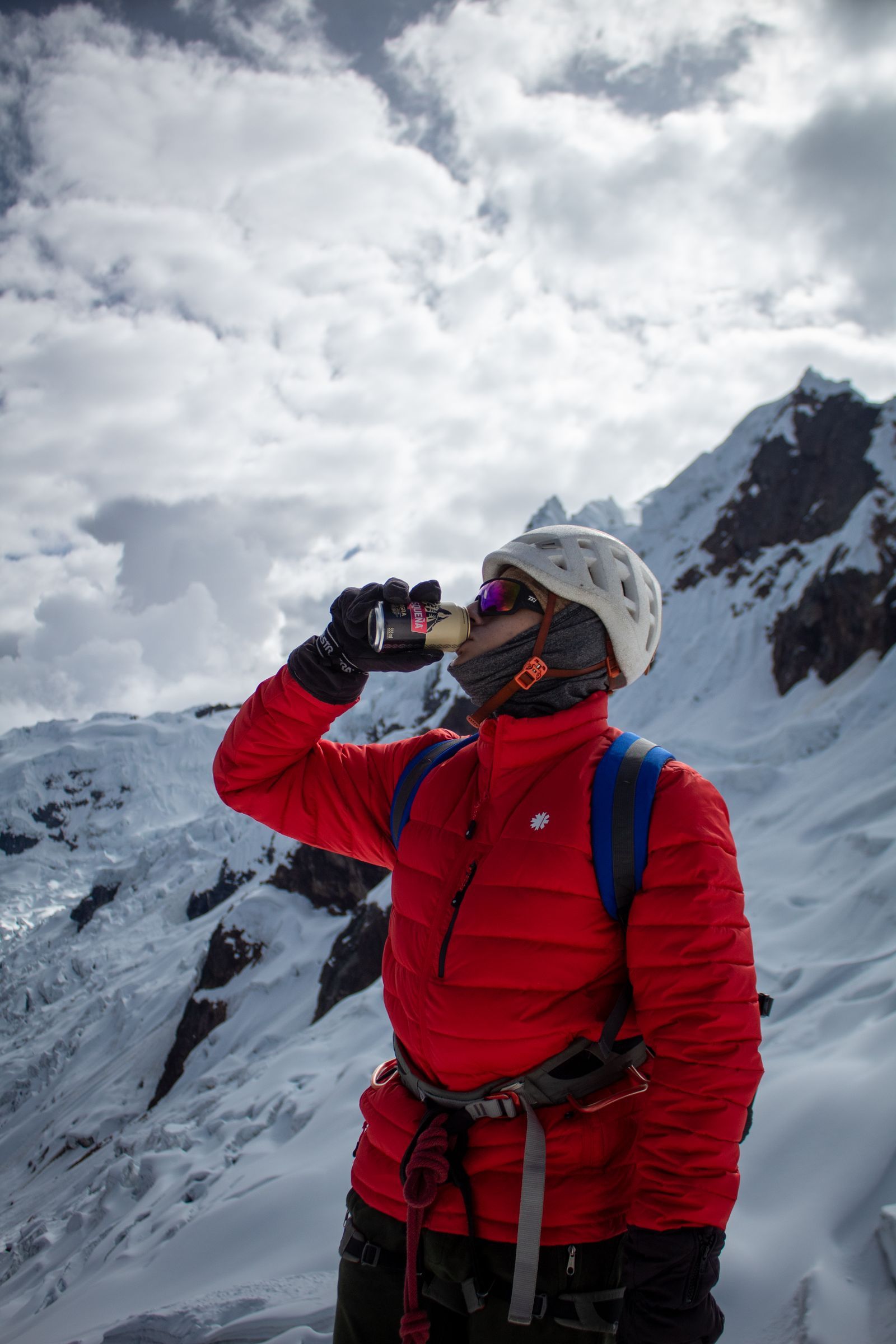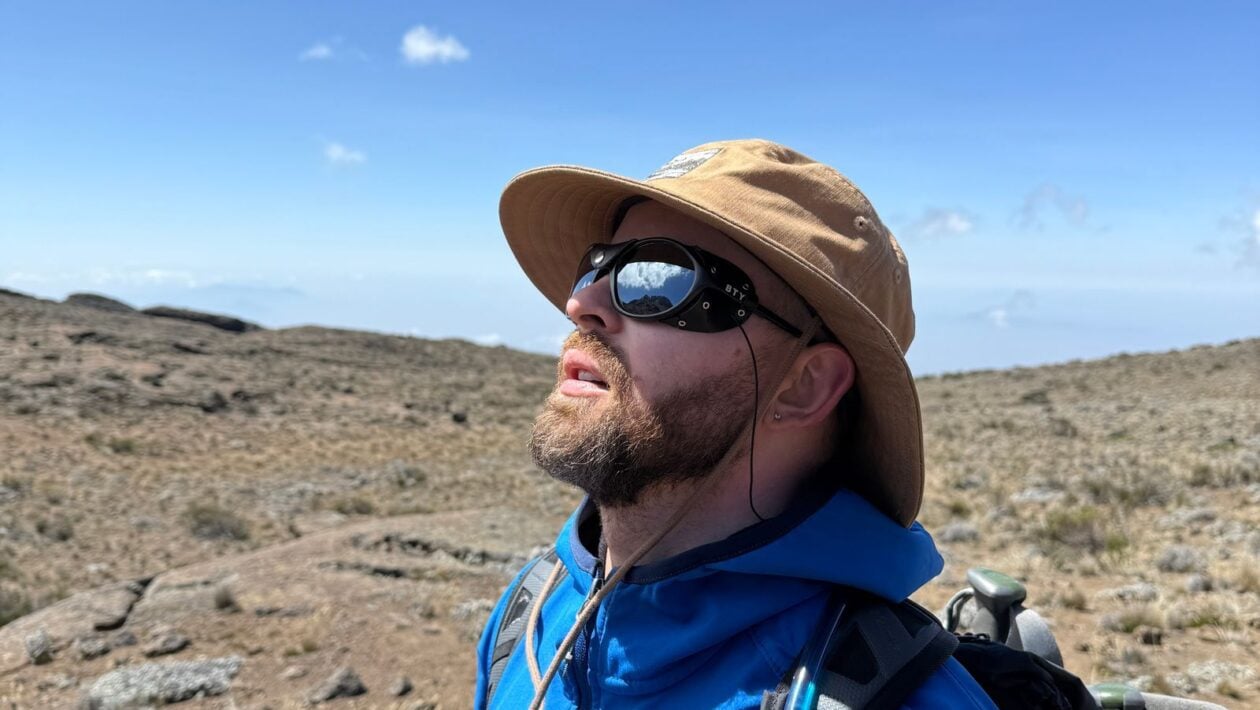
Heat and altitude change what a hiker loses on the way up, which is why a single bottle or a single sports drink rarely fits every day outside.
Salt leaves with the sweat
Most hikers think of hydration as a volume problem. Bring enough water, drink it, and the job is done. Sweat, though, is salty, and the salt that leaves with it doesn’t come back from plain water. Sodium is the electrolyte lost most in sweat. Potassium goes too, in smaller amounts.
Over a short walk those losses are modest, and the body handles them without any help. Over a long, warm day they add up, and the rate at which they add up depends far more on conditions than on the trail itself. That’s the core problem with treating hydration as a fixed recipe. The same route can call for very different things on two different Saturdays.
Hot days and thin air ask for different things
Heat and altitude often get lumped together as hard conditions, but they work on the body in different ways. Heat raises the sweat rate, and sodium loss rises with it. Altitude mostly raises water loss. The air up high is drier and breathing is heavier, so moisture keeps leaving even when a hiker doesn’t feel especially sweaty.
The practical upshot is that a hot day in the foothills and a cool day above treeline need different adjustments. The hot day needs more salt. The high day needs more water, and possibly some extra salt if it runs long. A hiker who answers both the same way, by carrying more of the same drink, is likely to get one of them wrong.
Timing plays a part as well. Cramps that show up late in a hike, or on the drive home, usually come first from tired muscles and only second from salt and water. That order is worth keeping in mind, because it argues against reaching for electrolytes as a fix for every ache on the descent.
The trouble with one bottle
A bottle of plain water does its job well. On a short, cool outing it’s often all anyone needs. On a long day in the heat, though, it replaces water without replacing sodium. One of the trail notes published by VitaminHill, a Boulder company that makes electrolyte sticks for hikers and trail runners, makes the point that the bigger risk on most hikes is drinking far more than you sweat.
A generic sports drink solves part of that and adds a different limit. Its formula is fixed. It delivers the same sodium per bottle on a 60-degree morning as on a 90-degree afternoon, and the same on a two-mile stroll as on a long ridge walk. Many are also designed around carbohydrate as much as electrolytes, which suits some days and not others. Neither option is wrong. Each is simply sized for one kind of day.
Scaling sodium to the forecast
An alternative is to set sodium by the route and the forecast rather than by habit. VitaminHill publishes the arithmetic it uses. Every 1,000 feet of climbing counts as 2.5 extra trail miles, and the base count is one stick per 6 trail miles. Its explanation of how the count works then adds a 500 mg sodium Ridge Salt stick for a forecast high over 75 F, a second over 85 F, and another for a high point above 9,000 feet.
Take a 7-mile route with 1,600 feet of gain. That’s 11 trail miles, which rounds to two sticks: a Switchback Citrus with 300 mg of sodium for the first climb and a Summit Recovery with 250 mg for the finish. On a 62-degree morning, that comes to 550 mg over the whole hike. Push the forecast to 88 F and two Ridge Salts join the pack, bringing the day to 1,550 mg. Same trail, nearly three times the sodium, entirely because of the weather.
The company is clear about where its system stops. The count starts from route and weather, not from an individual’s sweat, so heavy sweaters may add a stick. Under 3 trail miles at 75 F or cooler, water is probably enough. Each stick goes into 16 to 20 fluid ounces of water, and the water still does most of the work. Its hydration guidance is general information, not medical advice, and its statements have not been evaluated by the FDA.
Anyone on a sodium-restricted diet, or managing a heart or kidney condition, should talk with a doctor before using electrolyte products. For everyone else, the most useful change takes about a minute: check the forecast high and the route’s highest point before packing, then add salt for heat and water for height. And at the end of a hot day, look at the brim of your hat. White salt lines there are a fair hint that you sweat salty and may want the extra stick next time.