

Where we live has a quiet but incredibly powerful effect on our overall health. A home provides far more than just shelter; it shapes our sleep, our daily movement, our stress levels, our social connections, and the way we recover from busy days.
This is especially true in coastal areas like the Florida Panhandle. Many people are drawn to the water for obvious health reasons: abundant sunlight, fresh sea air, beach walks, and a slower pace of life. But long-term well-being depends on more than just beautiful scenery. The neighborhood surrounding a home can either actively support healthy routines or introduce daily friction that makes living well harder than it needs to be.
Why Neighborhood Design Matters for Your Health
Healthy routines are much easier to maintain when our environment naturally supports them. We are more likely to take an evening walk when the streets feel safe and pleasant. We are more likely to spend time outside when common areas are well-cared for. We are more likely to connect with our neighbors when there are natural gathering spaces.
Small design details profoundly shape our everyday behavior:
- Wide sidewalks or dedicated walking paths encourage cardiovascular movement.
- Calm, low-traffic streets make outdoor time feel restorative rather than stressful.
- Shared amenities, like pools or fitness centers, support regular exercise.
- Clear community rules reduce neighborhood conflict and mental load.
These aren’t just luxury real estate features—they are critical quality-of-life details that impact our physical and mental health.
How Privacy and Calm Reduce Daily Friction
We often underestimate how much chronic stress is generated by small daily interruptions: traffic noise, parking struggles, poorly maintained common areas, or simply feeling like there is no quiet place to reset our nervous systems.
This is a primary reason why many wellness-minded buyers compare Panama City Beach gated communities when exploring coastal living options. The true value isn’t simply the physical gate. The real question is whether the community’s infrastructure supports a lower-stress daily life.
When evaluating a neighborhood for its health benefits, look at the entire environment:
- Is there a true sense of privacy and retreat?
- Is the traffic mostly local and slow-moving?
- Are the roads and common outdoor areas well-maintained?
- Does the community feel welcoming and safe, rather than isolated?
Key insight: Communities that blend high walkability with accessible green spaces consistently show the strongest positive impact on resident mental health and daily stress reduction.
Walkability Supports More Than Just Fitness
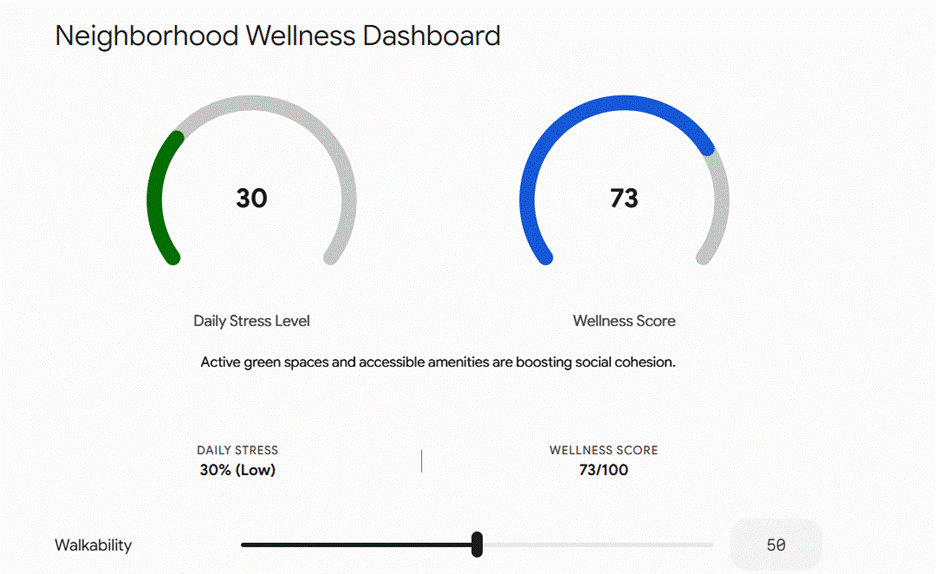
Walking is one of the simplest, most effective health habits we can adopt, but we are only likely to do it when it feels natural and safe. In a coastal community, walking serves multiple purposes: it is part cardiovascular exercise, part stress relief, and part social routine.
A neighborhood that actively encourages walking can support:
- Improved cardiovascular health and weight management.
- Increased time outdoors (boosting Vitamin D).
- Lower cortisol levels after the workday.
- Casual, low-pressure social interaction with neighbors.
Ask yourself if you would realistically walk there. Are there shaded areas to protect from the Florida sun? Are the roads comfortable? Are there nearby trails, sidewalks, or boardwalks? A neighborhood might look beautiful in a listing photo but still fail to support the kind of daily movement your body needs.
Social Connection Is a Critical Health Factor
Wellness is not only about exercise and nutrition; social connection plays a massive role in how we feel, especially after a move. Seasonal residents and retirees often need to build entirely new social routines from scratch. Families relocating from another state need a sense of community beyond the walls of their house.
Neighborhood amenities are only helpful when they are actually utilized. A clubhouse, community pool, marina, or an active event calendar can create low-pressure environments to meet people. The healthiest communities give residents the option to participate socially without forcing constant interaction.
Low-Maintenance Living Protects Your Time
Home maintenance can be satisfying, but it can also become a major source of anxiety. In coastal areas, upkeep involves dealing with salt air, severe weather prep, landscaping, and exterior repairs.
Some communities reduce that burden through shared maintenance standards, HOA management, or collectively cared-for amenities. This is a significant mental health benefit for people who travel often or split their time between multiple homes. Lower-maintenance living doesn’t mean zero responsibility, but it does mean a shared load, which can significantly reduce homeownership stress.
The Healthiest Home Is the One That Fits Real Life
The “best” neighborhood is rarely the most expensive one, or the one with the longest list of luxury amenities. The best neighborhood is the one that supports the way you actually want to live.
For one buyer, wellness means quiet streets and a peaceful view for meditation. For another, it means robust fitness amenities and an active social calendar to combat loneliness.
Coastal living has incredible potential to be restorative, but the setting has to work beyond the vacation postcard. When your neighborhood actively supports healthier routines, the benefits show up in small, vital ways every single day: an evening walk, a quieter morning, a familiar neighbor, and a little more room to breathe.