
Key Takeaways
- Compare a power wheelchair scooter against a standard mobility scooter based on where the trip happens most: tight hotel rooms, cruise hallways, and restaurant aisles usually favor a compact electric wheelchair over a longer scooter.
- Check the lifting math before buying any folding power wheelchair scooter—total weight, folded size, and battery removal matter more than brochure claims if one person has to load it into a car trunk.
- Plan battery range for the full 2-week routine, not just one outing; travel-ready motorized wheelchairs need realistic charging habits, airline-approved batteries, and enough daily miles for shopping, museums, and longer family days.
- Prioritize comfort over the lightest model if you’ll sit for hours at a time—armrests, footrests, seat padding, and support can make or break portable mobility equipment during longer outings.
- Watch out for cheap used equipment and older electric wheelchairs with worn batteries, hard-to-find parts, or repair gaps, because a mid-trip breakdown can turn a travel aid into a travel problem.
- Match the chair to the rider, not the trend; some adults need a heavy-duty or bariatric power wheelchair scooter with better support and stability, even if a foldable ultra lightweight model looks easier to transport.
Two weeks is where bad mobility equipment gets exposed. A power wheelchair scooter might look fine in a showroom or on a product page, but travel has a way of finding every weakness fast—battery anxiety, awkward folding, cramped hotel turns, and the plain fact that a heavy chair can wear out both the rider and the person lifting it. For active seniors, that isn’t a small nuisance. It can turn a planned getaway into a series of workarounds.
In practice, the problem usually isn’t whether someone needs mobility help. It’s whether the device fits real life for 14 straight days. Airports are crowded. Cruise corridors are narrow. Restaurant aisles don’t move for anyone. And by day nine or ten, comfort matters more than brochure promises (it always does). Families often compare electric wheelchairs, scooters, and folding transport options as if the differences are minor. They’re not. A few pounds of extra weight—or a wider turning radius—can decide whether a chair stays useful all trip long or becomes dead cargo in the trunk.
Why the power wheelchair scooter debate matters more for 2-week trips now
Two weeks changes everything.
A quick outing can hide bad equipment choices, but a 14-day routine exposes them fast. That’s where the power wheelchair scooter question stops being a shopping preference and turns into a daily comfort, safety, and energy issue.
How longer outings expose the limits of heavy wheelchairs and bulky scooters
By day three, the problem usually isn’t speed. It’s lifting a heavy wheelchair into a car trunk, steering a bulky scooter through hotel hallways, or realizing a large motorized unit takes up half the room (and still feels awkward at breakfast). For older adults planning longer travel, electric wheelchair scooter options need to be judged by what happens 20 times in two weeks: folding, charging, storing, and transport.
- Weight: standard electric wheelchairs can run well over 100 lbs
- Storage: bulky scooters often need more turning space
- Fatigue: repeated transfers wear people out—fast
Why active seniors are comparing lightweight, folding, and portable mobility equipment before booking travel
Smart planning. Active seniors are asking power chair vs mobility scooter questions earlier because two-week trips demand a better fit, not just a lower price. The honest answer is that mobility scooter or power wheelchair decisions depend on trunk strength, hand control, and how much walking support is needed each day.
A practical checklist helps:
Real results depend on getting this right.
- Pick a powered mobility device for seniors that folds in one piece.
- Check battery range for full sightseeing days.
- Compare portable scooter and wheelchair choices by total lifted weight, not brochure claims alone.
In practice, clinicians and mobility retailers such as 1800Wheelchair see the same pattern—lighter, foldable transport equipment gets used more often on real trips.
Power wheelchair scooter vs. mobility scooter: which one actually works for travel?
At check-in, a couple realizes the hotel room barely leaves space between the bed and dresser. Later, the same trip includes a narrow cruise corridor and a crowded restaurant. That’s where the power wheelchair scooter question stops being abstract and gets practical.
For travel, the honest answer is this: a power chair usually works better indoors, while a scooter often does better on longer outdoor paved routes. Anyone comparing power chair vs mobility scooter models should start with where the chair or scooter will spend most of its time—not how it looks online.
How a power wheelchair handles tight hotel rooms, cruise corridors, and restaurant aisles
A electric wheelchair scooter options search can be misleading, because a true power wheelchair has one major travel advantage: a tighter turning radius. Joystick control helps older adults pivot around luggage, bedside tables, and restroom doors with less backing up. In practice, that matters more than top speed.
Where a scooter still makes sense for outdoor distance and longer paved routes
For boardwalks, resort paths, and big parking lots, a mobility scooter or power wheelchair choice often leans scooter. Scooters usually give better legroom and can feel steadier over longer paved distances. But they’re often heavier, wider, and less forgiving in indoor spaces.
The turning radius, joystick control, and transport differences most buyers miss
Three details decide most trips:
- Turning radius: Power wheelchairs are usually better in compact indoor settings.
- Transport: Some folding electric wheelchairs weigh about 33 pounds, while scooters may need more disassembly.
- Control: A joystick can be easier than handlebars for an elderly traveler with arthritis or shoulder fatigue.
That’s why a powered mobility device for seniors should be matched to the trip plan, not just the price tag. For families weighing portable scooter — wheelchair choices, the best fit is the one that gets used every day—without becoming heavy equipment nobody wants to load.
Not complicated — just easy to overlook.
What to check before buying a travel-ready folding power wheelchair scooter
Can one power wheelchair scooter really handle 14 days of airports, hotel halls, cruise ramps, and long shopping stops? Yes—if the buyer checks the boring details first, because those details decide whether a trip feels easy or turns into daily lifting, charging, and comfort trouble.
Weight, folded size, and whether one person can lift it into a car trunk
Start with the numbers. A travel model that weighs 33 pounds is in a different class from heavy duty electric wheelchairs that push past 90, and folded size matters just as much for transport. For families comparing mobility scooter or power wheelchair, trunk height and hand strength usually settle the question fast.
Battery range, airline-approved rules, and charging plans for a 14-day routine
Battery range needs to cover real life, not showroom claims. For travel, look for airline approved lithium batteries, removable packs, and a daily range near 10 to 13 miles—then plan nightly charging from day one. Good electric wheelchair scooter options make that routine simple.
Seat comfort, armrests, footrests, and support for adults using motorized wheelchairs all day
Comfort isn’t fluff. Adults using a powered mobility device for seniors all day need padded seats, steady armrests, and footrests that don’t force the knees too high (a common problem with cheap, compact, foldable equipment). In practice, portable scooter and wheelchair choices should support six to eight hours without leaving hips and shoulders sore.
Flat-free tires, indoor-outdoor use, and why rough terrain changes the decision fast
And tires matter more than shoppers think. Flat-free tires work well for indoor floors, pavement, and smooth outdoor paths—but rough terrain changes everything, and that’s where the whole power chair vs mobility scooter debate gets real for active seniors using lightweight, motorized wheelchairs.
The real buying questions behind a power wheelchair scooter search
Write this section as if explaining to a smart friend over coffee — casual — accurate and specific. The search for a power wheelchair scooter usually starts with one question and ends with three others: Will it fit in the car, will it last for a full travel day, and who will handle the weight? That’s where powered mobility device for seniors choices get real fast.
How Medicare coverage differs from what travelers usually want
Medicare often pays for in-home medical need, not the lightest portable or airline-approved travel equipment people actually want for airports, cruises, — long shopping days. In practice, that means a covered wheelchair may be bulkier, less compact, and harder to transport than today’s electric wheelchair scooter options. That’s the gap families run into.
Why cheap used equipment can create repair, battery, and safety problems mid-trip
A cheap used scooter or older motorized wheelchair can look like a bargain — until day four of a two-week trip. Common problems include:
- weak battery range after 6 to 12 months of prior use
- missing parts or hard-to-find repair equipment
- heavy frames that don’t fold well for transport
The honest answer is that mobility scooter or power wheelchair decisions should factor in battery age, charger type, and tire condition before price.
The short version: it matters a lot.
When a heavy-duty or bariatric model is the better pick than the lightest foldable option
Lightweight isn’t always best. For adults needing extra seat width, higher weight capacity, or better stability on uneven terrain, a heavy duty or bariatric model is often safer than the lightest foldable chair. That’s why a careful power chair vs mobility scooter review matters, and why families should compare portable scooter and wheelchair choices by fit, not just pounds.
A practical 2-week travel test for choosing the right portable power mobility device
Two weeks will expose every weakness in a power wheelchair scooter.
- Days 1-3: airport, car transfer, and first-night hotel setupStart with the lift test. If a travel chair feels heavy on day one, it won’t get easier by day ten. Good electric wheelchair scooter options should be lightweight, folding, and simple enough to move from curb to trunk to hotel room without taking the frame apart. A smart buyer checks battery rules through FAA guidance and confirms hotel charging access before leaving home.
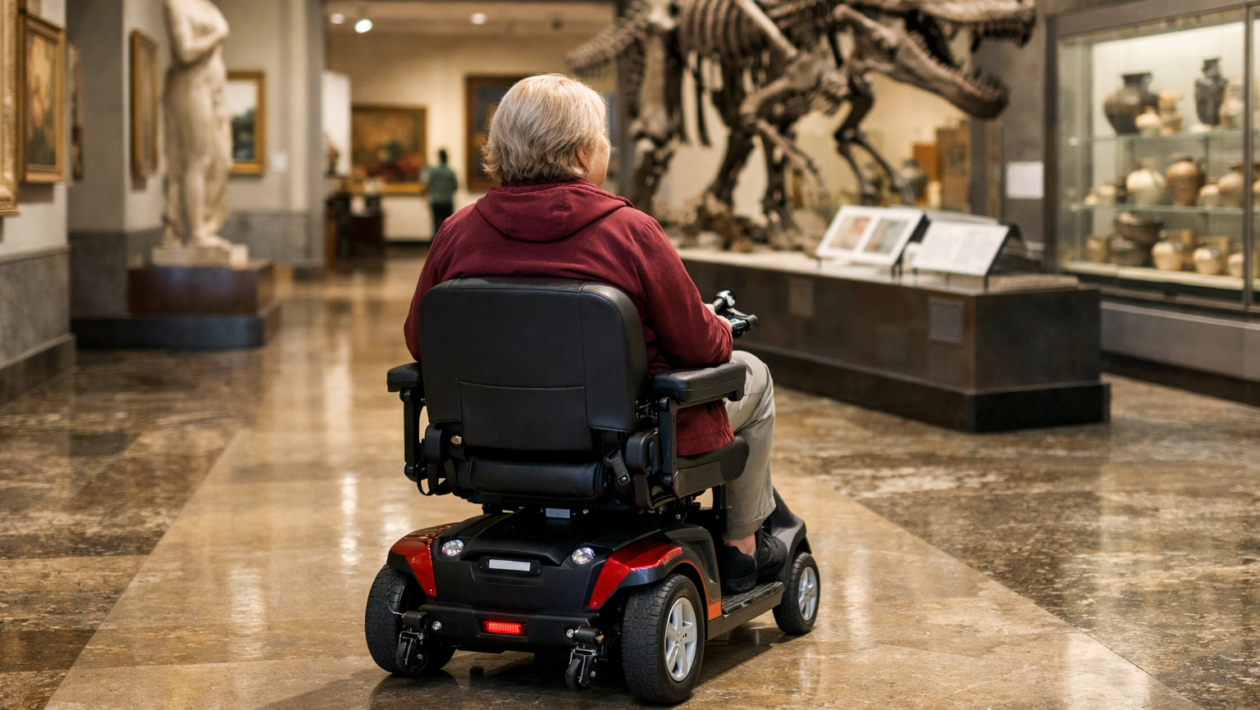
- Days 4-9: shopping, museums, family outings, and energy conservationThis is where the real choice shows up. The mobility scooter or power wheelchair question matters most in tight aisles, elevators, and museum turns. In practice, a powered mobility device for seniors works better if it has a tight turning radius, flat-free tires, and enough range for a full day of transport without pushing into fatigue. For longer outings, compare power chair vs mobility scooter needs based on posture support and indoor control—not just speed.
- Days 10-14: fatigue, charging discipline, and whether the chair still fits the routineLate-trip fatigue tells the truth. A dependable power wheelchair scooter still fits the schedule when the user is tired, the battery needs nightly charging, and the family is rushing. The best portable scooter and wheelchair choices stay compact, portable, and easy to fold after dinner or a long outing. For battery safety and public charging basics, reviewers can check DOT disability travel guidance and MedlinePlus mobility equipment information.
Frequently Asked Questions
Will Medicare pay for a disability scooter?
Sometimes, but not automatically. Medicare Part B may help cover a mobility scooter or a power wheelchair scooter if a doctor documents that it’s medically necessary for use inside the home, and the equipment is ordered through a Medicare-enrolled supplier. The honest answer is that coverage is often stricter than people expect—travel use, shopping trips, and vacations usually aren’t enough on their own.
What kind of wheelchair is best for spina bifida?
It depends on strength, balance, posture, and how the chair will be used day to day. Some people do well with a lightweight manual wheelchair, while others need a motorized power wheelchair scooter with more support, easier transport, or less physical strain on the shoulders. For spina bifida, fit matters more than brand names, and pressure relief should never be treated as an afterthought.
Can I use a wheelchair for fibromyalgia?
Yes, — for some adults it’s a smart energy-saving tool, not a sign of giving up. A portable wheelchair, transport chair, or foldable electric option can make longer outings possible on flare days when walking becomes painful or exhausting. In practice, the best choice is the one that helps someone stay active without paying for it with two days of recovery.
How to get a free disability scooter?
Free scooters are hard to find, — not impossible. Some people get help through nonprofit groups, veterans’ programs, state disability assistance, Medicaid waivers, community lending closets, or donated used equipment through local medical equipment networks. Still, families should be careful—”free” can mean old batteries, heavy duty models that don’t fold, or repair problems that cost more later.
What’s the difference between a mobility scooter and a power wheelchair scooter?
A scooter usually has a tiller handle in front and works best for people who can sit upright and steer with both hands. A power wheelchair scooter, or electric wheelchair, uses a joystick and is usually easier in tight indoor spaces, especially for seniors with weaker shoulders, hand pain, or limited trunk control. This is where a lot of buyers get stuck—and choose based on looks instead of daily function.
Is a folding power wheelchair better for travel than a scooter?
Usually, yes. A folding power wheelchair is often more compact, lighter, and easier to load into a trunk than a heavy scooter that needs to be taken apart. If travel, restaurants, cruise boarding, or family outings are part of the plan, foldable and airline approved designs tend to work better.
Most people skip this part. They shouldn’t.
How much does a power wheelchair scooter usually weigh?
There’s a wide spread.
Heavy duty power wheelchairs can weigh well over 100 pounds, while some lightweight folding models come in closer to the 30- to 60-pound range, which makes transport much easier for seniors and caregivers. That’s not a small detail—weight often decides whether the chair gets used or sits in the garage.
Can you take a motorized wheelchair or scooter on an airplane?
Often yes, but battery type matters.
Airline approved travel models with removable lithium-ion batteries are usually easier to manage than older electric wheelchairs or scooters with non-removable battery systems. Before any flight, the airline should be called directly and the battery specifications checked in writing (don’t rely on a gate agent guessing).
Should seniors buy a manual wheelchair, scooter, or electric power chair?
That depends on three things: arm strength, lifting ability, and how far they plan to go. A manual wheelchair can work well for short distances if the user or caregiver can manage it, but seniors with arthritis, fatigue, or poor endurance often do better with a compact power wheelchair scooter. Realistically, the right choice is the one that keeps outings safe and doable—not the one that seems cheapest on day one.
Are cheap used power wheelchairs and scooters worth buying?
Sometimes, but buyers need to be cautious. Used mobility equipment may come with worn batteries, outdated chargers, weak tires, or no service history, and repairs on electric wheelchairs can get expensive fast. If someone is considering a used scooter or motorized chair, they should check battery age, weight capacity, folding parts, and whether replacement parts are still easy to get.
A two-week trip is where good mobility equipment proves itself—or doesn’t. The right power wheelchair scooter has to do more than move well on day one. It needs to fold without a struggle, fit the car trunk or cruise cabin plan, handle tighter indoor spaces, and still feel comfortable after long museum days, restaurant stops, and late-evening returns to the hotel. That’s the part shoppers often miss: travel success usually comes down to the boring details, not the brochure headline.
Price matters, but so do battery rules, charging habits, seat support, and total lift weight. A lighter folding chair may be the better travel match for one person, while another traveler will need a sturdier model with more room and support, even if it gives up some portability. Medicare rules and used-equipment bargains can complicate that choice fast.
Before buying, the reader should write out a real 14-day itinerary, measure the car trunk or storage space, and list who will lift, charge, and fold the device each day. Then compare only the models that pass that test. Travel gets easier when the equipment fits the routine—not the other way around.
For more great reading, visit our site and explore related topics.