
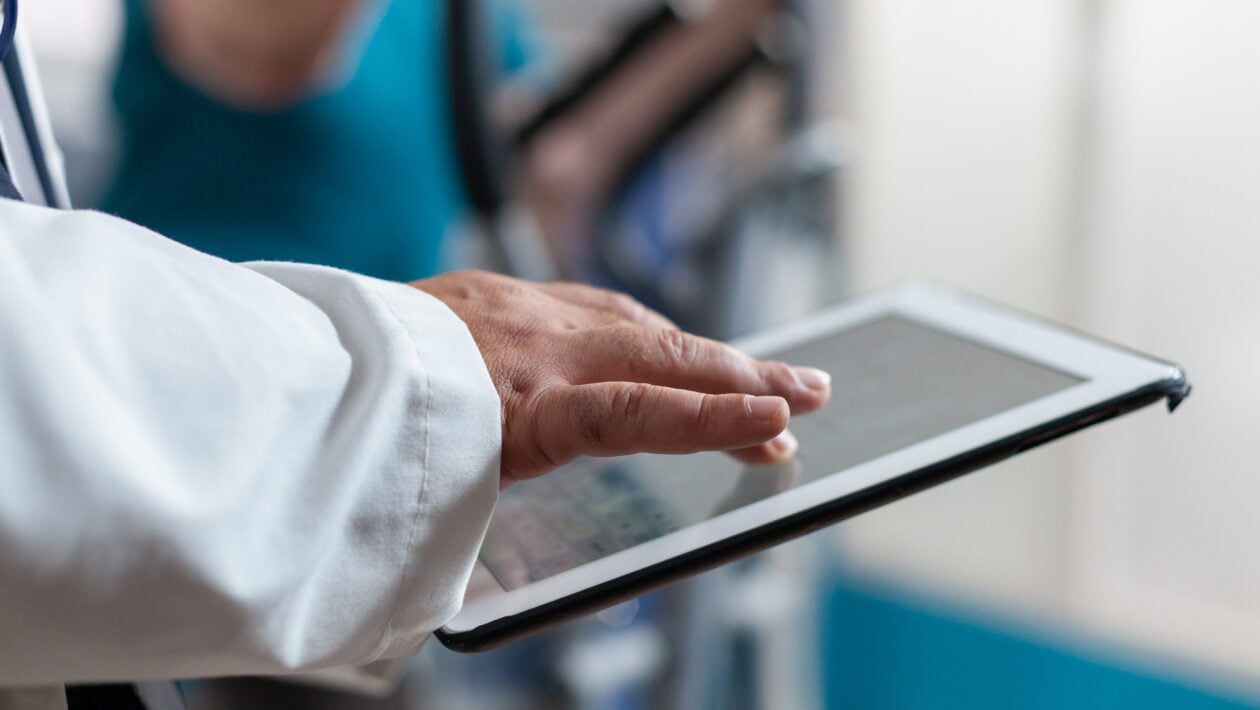
If you walk into a hospital today, the buzz isn’t just coming from the monitors—it’s the low-level hum of staff burnout. Nurses are fighting with “workstations on wheels” that have a mind of their own, and doctors are losing hours of their lives to endless drop-down menus on desktop screens. The biggest bottleneck in modern medicine isn’t usually a lack of skill; it’s the fact that the technology is getting in the way of the humans.
We need to stop thinking about touchscreen technology as a fancy luxury and start seeing it as a way to reclaim time. When you strip away the mouse and keyboard, you’re removing a layer of friction that has been slowing down patient care for decades.
Here is a look at how interactive displays are actually helping healthcare facilities breathe again.
1. Getting the Data Out of the Hallway
The old-school “central nursing station” is a relic. Having every clinician walk back to a big desk to update a chart creates a massive traffic jam. It leads to batch charting, where a nurse sees four patients and then tries to remember the specific heart rate of Patient B while sitting in a noisy hallway twenty minutes later.
By mounting medical-grade touchscreens right outside the patient rooms, you allow for real-time updates. A nurse can check a dose, tap a “delivered” button, and update a pain scale without ever breaking their stride.
It’s about point-of-care accuracy. When the data entry happens three feet away from the patient instead of thirty yards down the hall, the risk of a tired brain making a typo drops significantly.
2. The War on Crevices
Let’s be blunt: keyboards are disgusting. In an ICU or a surgical suite, every single key on a standard keyboard is a tiny canyon where pathogens can hide. Even the most diligent cleaning crew can’t get every nook and cranny of a plastic keyboard.
This is where glass touchscreens change the game. Since there are no buttons or seams, you can hit the screen with aggressive, hospital-grade chemicals and wipe it clean in two seconds.
More importantly, modern sensors are finally glove-friendly. A surgeon in the middle of a procedure can pinch-to-zoom on a high-res MRI scan without having to break the sterile field or ask an assistant to click a mouse for them. It keeps the control in the hands of the person doing the work.
3. Murdering the Paper Clipboard
The first thing a patient shouldn’t see when they walk in is a tattered clipboard with a crooked photocopy of an intake form. For the front-desk staff, trying to read a stranger’s handwriting and manually typing it into a computer is a recipe for billing errors and insurance denials.
Self-service kiosks change the vibe of the waiting room. Patients scan their own ID, verify their insurance, and sign their consents digitally.
When the patient handles their own data entry, it flows directly into the system. This kills the double-handling of paperwork, which lets the front-desk staff actually look at the people in the room and handle the complex stuff—like navigating insurance hurdles—instead of just being data entry clerks.
4. Turning the Wall into a Teaching Tool
Most patients only remember about 20% of what a doctor tells them. When someone is stressed or in pain, their brain just doesn’t process verbal lists of symptoms and side effects.
Using a large-format touchscreen in an exam room turns the visit into a visual conversation. A doctor can pull up a 3D model of a heart, rotate it with a finger, and draw exactly where a stent is going to go.
When a patient can touch the screen and see the plan in 3D, it stops being “scary doctor talk” and starts being a plan they actually understand. That clarity is what leads to people actually following their post-op instructions when they get home.
5. Solving the Hospital Labyrinth
Major medical campuses are notoriously impossible to navigate. A person who is already panicking about a biopsy doesn’t need the added stress of getting lost in Radiology Wing B.
Interactive wayfinding kiosks act as a 24/7 digital concierge. Unlike a static map on a wall, these screens give step-by-step directions. Many systems even let the patient tap their phone to the screen to “take the map with them.” It’s a small thing that massively lowers the anxiety floor of the entire building.
Invest in Touchscreens
Efficiency in a hospital shouldn’t be about working faster; it should be about removing the busy work that makes the job miserable. Touchscreens aren’t just a hardware upgrade; they are a move toward a more human way of interacting with data.
When you make it easier for a nurse to chart, a surgeon to see an X-ray, and a patient to check in, you aren’t just improving metrics. You’re creating a calmer, more focused environment where the tech finally gets out of the way so the care can happen.