
Key Takeaways
- Check the real lift weight before buying portable wheelchairs, not just the marketing label. A chair that weighs 13 to 19 pounds feels completely different from a 35-to-50-pound standard wheelchair when it goes in and out of a trunk three times a week.
- Match the chair type to daily use. A lightweight transport wheelchair often works best for appointments and family outings, while a manual wheelchair with large rear wheels makes more sense if the rider wants to self-propel at least part of the time.
- Measure storage first. Portable wheelchairs only solve the problem if the folding frame fits your car, closet, hallway, and entryway without removing half the trunk load every time.
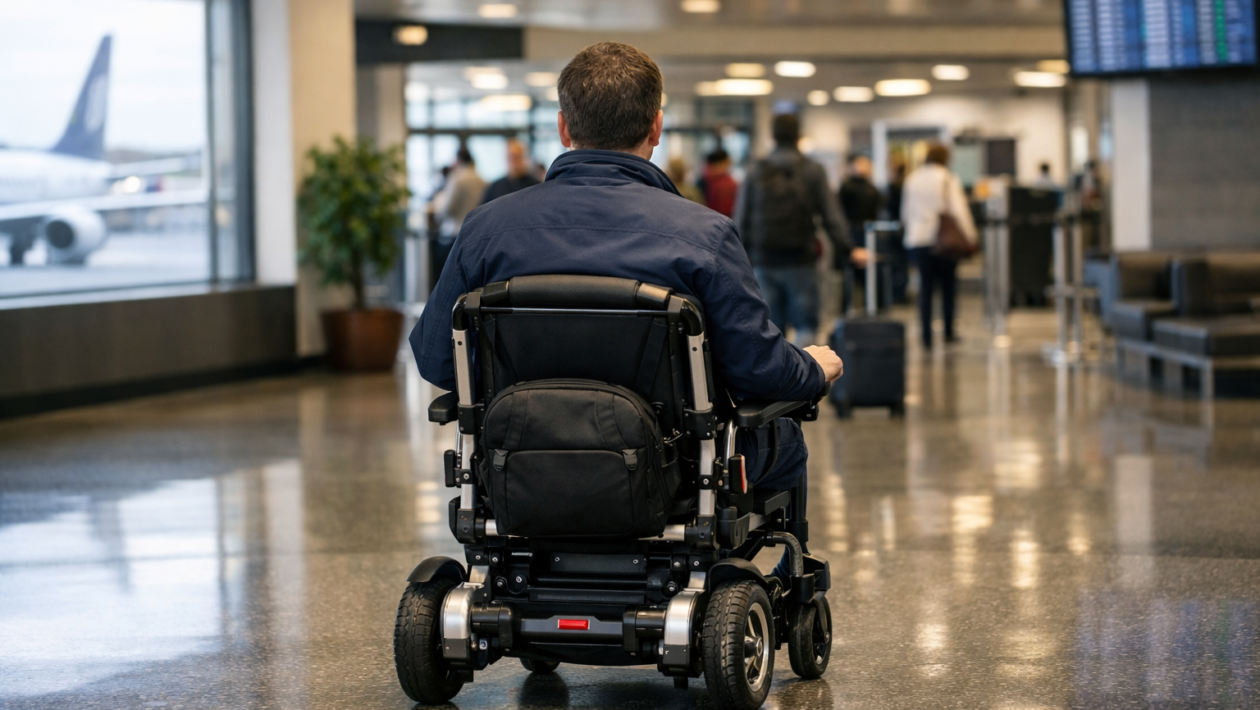
- Compare electric and motorized options with care. A portable power wheelchair can reduce strain for an elderly parent with low stamina or arthritis, but families still need to check folded size, total weight, battery range, and whether it loads in one piece.
- Choose heavy-duty or bariatric portable wheelchairs for safety, not wishful thinking. Higher weight capacity, seat width, brakes, and frame support matter more than chasing the lightest model.
- Ask coverage questions early. Medicare and insurance may cover a basic wheelchair, but the portable wheelchair that actually fits travel, appointments, and caregiver lifting limits is often the one families pay for themselves.
That’s why portable wheelchairs are getting fresh attention from caregivers and aging adults alike: not as a luxury, — as a blunt fix for a problem families feel in their backs, shoulders, and schedules. A chair that weighs 35 to 50 pounds can turn a simple outing into a small production. And too often, that means the chair stays home.
Right now, more older adults are staying active longer, even as stamina, balance, or pain make longer walks harder. Their spouses — adult children are the ones loading, folding, pushing, and figuring out whether the thing will fit beside a walker, a tote bag, and three grocery sacks. In practice, a drop from 40 pounds to 19—or even 13.5—changes the whole equation. Faster loading. Less lifting strain. Fewer skipped appointments and fewer quiet arguments in parking lots (those happen more than people admit). The honest answer is that weight has become a daily quality-of-life issue, not just a spec on a product page.
Why portable wheelchairs matter right now for families lifting chairs in and out of cars
Heavy chairs change family routines fast. For adult children helping a parent get to cardiology visits, church, holiday dinners, or a long-awaited vacation, the hard part often isn’t the appointment itself.
Standard wheelchairs often land in the 35-to-50-pound range, and that difference adds up over a week. Two medical visits, one family outing, one pharmacy stop—that can mean six to eight lifts, plus awkward twisting in parking lots and cramped garages. In practice, that’s where backs get angry, wrists flare up, and a spouse starts thinking, quietly, that staying home sounds easier.
That’s why portable wheelchairs matter right now. They’re not just about convenience. They reduce loading strain, fit more easily into a small sedan or compact SUV, and make it more likely the chair gets used instead of left in a closet because everyone dreads the lift. One mobility retailer, 1800wheelchair, has pointed to the same shift families are seeing firsthand: weight has moved from a spec sheet detail to the deciding factor.
And yes, the difference is real—a chair in the mid-teens or low-20s feels nothing like a standard model at the end of a long day.
The short version: it matters a lot.
What counts as a portable wheelchair today — and how the category has changed
Manual portable wheelchairs vs transport wheelchairs
Shoppers mix these up all the time. A manual wheelchair usually has large rear wheels with hand rims, which lets the user self-propel for short stretches if they have enough arm strength — grip. A transport wheelchair has smaller rear wheels and is meant for caregiver-assisted pushing, making it a common pick for elderly parents who walk a little at home but need help for longer distances.
The distinction matters in daily life. Manual models give more independence, but they can be wider and a bit heavier. Transport chairs are often more compact, easier to steer through a narrow doctor’s office doorway, and better for quick trips. But if a parent wants to move around a waiting room alone, a transport chair won’t do it.
Folding, foldable, compact, and ultra lightweight: the terms that change the buying decision
Marketing language gets messy here. Folding or foldable usually means the frame collapses for storage, though some chairs still need footrests or wheels removed before they fit in a trunk. Compact speaks to folded size. Lightweight often means roughly 15 to 30 pounds, while ultra lightweight can drop into the teens for a manual chair. The lightest models feel different right away—no spec sheet required.
A lightweight portable wheelchair can mean the gap between one easy lift and a two-step heave with a knee against the bumper. Realistically, a 13- to 19-pound frame is in a different class from a 35-pound standard chair, even before cushions, bags, or removed parts get added back in.
And there’s another catch. Some so-called portable wheelchairs are light only after the wheels come off, which is fine for some families and a hassle for others. If the person loading the chair already has shoulder pain or arthritis, one-piece folding beats extra assembly almost every time.
The real storage problem: trunk space, closet space, and the lift nobody talks about
What 35 to 50 pounds means in daily caregiver use
Here’s what most people miss: the burden isn’t one dramatic lift. It’s repetition. Small strain becomes chronic strain.
The short version: it matters a lot.
Physical therapists and caregiver safety guides have warned for years that awkward lifting and twisting are common injury triggers during home care and transport. The National Institute on Aging discusses mobility changes and fall risk in older adults, and the CDC tracks how falls and overexertion affect older adults and caregivers alike. Helpful background sits here: National Institute on Aging, CDC falls information, caregiving guidance.
But the emotional part matters too. Families skip outings when loading the chair feels miserable. Guilt creeps in. So does resentment.
Which portable wheelchairs fit small cars, narrow hallways, and tight home storage
Storage is where specs stop being abstract. A folded chair that measures around 28 to 30 inches high — 14 to 15 inches deep can fit in a surprising number of trunks, coat closets, and apartment corners—if it folds in one piece. That last part matters more than people expect.
For small cars, the first question is blunt: will this fit without clearing out half the trunk? Families should measure the trunk opening, not just trunk depth. A chair may fit inside but still fight the opening angle. In apartment buildings, width counts too, especially in elevators and narrow hallways where bulky push handles or fixed leg rests create a snag point.
Reliable planning helps. The Administration for Community Living covers aging and independent living resources, while MedlinePlus offers plain-language mobility equipment basics. A family comparing folded dimensions, seat width, and brake access can also check home safety material from NIH and transport guidance from AOTA: Administration for Community Living, MedlinePlus mobility aids, American Occupational Therapy Association, home safety checklist.
Worth pausing on that for a second.
One practical rule works better than guesswork: if the chair needs wheel removal, detached footrests, and a careful trunk puzzle every time, it’s less portable than it sounds. Full stop.
How to choose between manual, electric, and power portable wheelchairs without overbuying
When a lightweight manual or transport wheelchair works better
Short outings often don’t need a motor. A manual or transport chair is usually the better fit for specialist visits, family parties, airport terminals with help nearby, or museum days where the parent still walks part of the time and sits only for distance. These chairs are lighter, simpler to store, and easier to lift into a car.
A seat time of 30 to 90 minutes is a useful checkpoint.
If that’s the typical pattern, and the user still transfers with mild help, a manual or transport option may cover the real need without adding battery weight, charging routines, or joystick controls. Some standard wheelchairs still make sense for full-time users who want larger rear wheels, more seat options, or a stronger daily-use frame. But not every family needs that much chair.
That’s why lightweight portable wheelchairs have pulled so much attention. They match the part-time, caregiver-assisted reality of a lot of aging households better than bulky standard models do.
When an electric or motorized portable wheelchair earns its cost
Power matters when stamina is low. For someone with arthritis, severe fatigue, weak grip, fibromyalgia, or a condition that makes self-propelling painful, an electric or motorized chair can protect energy for the actual outing instead of spending it all on movement. A folding power wheelchair in the low-30-pound range is a very different tool from an old-style 150-pound chair that needs a vehicle lift.
The short version: it matters a lot.
Battery range is one of the big filters.
A realistic target for family use is about 10 to 13 miles per charge, which usually covers clinics, terminals, hotels, and big family venues with room to spare. Indoors, a power chair often beats a scooter because the turning radius is tighter and foot placement is simpler for transfers. Scooters and hybrid styles still have a place, but they’re not always ideal in a narrow bathroom hallway or crowded waiting room.
Travel families should also read airline rules before buying. The FAA posts battery guidance, and TSA explains mobility device screening and airport support. Good background is here: FAA battery guidance, TSA special procedures, DOT wheelchair assistance, and this practical piece on portable wheelchairs for travel.
When heavy-duty or bariatric portable wheelchairs are the safer choice
Safety comes first. If the user needs a wider seat, a higher weight limit, extra frame support, or more stable positioning, a heavy-duty or bariatric chair may be the right answer even if it adds pounds. No caregiver should trade safety for a lighter lift.
The tradeoff is plain: more support usually means more heavy lifting unless the frame is engineered to stay light. Families should compare weight capacity, seat width, total chair weight, and whether the chair stays in one piece when folded. A 350-pound-capacity model that still comes in under 20 pounds is rare, but it changes the equation fast.
And if transfers are already unsafe, the better answer may not be a different chair at all. For some households, a patient lift for portable wheelchair users does more to prevent injury than forcing another awkward manual transfer.
What families should check before buying portable wheelchairs for travel, appointments, and everyday use
A five-point portable wheelchair checklist for caregivers
Skip the vague shopping filters. Families need a short list that reflects real use, not showroom talk.
- 1. Chair weight and lift weight: Check the frame weight and the fully assembled weight. A chair listed at 13.5 pounds may weigh closer to 19 with wheels attached.
- 2. Folded size: Ask whether it folds in one piece or needs parts removed. That changes daily effort more than most buyers expect.
- 3. Fit and comfort: Seat width, seat depth, and weight capacity should match the user for at least 30 to 90 minutes of sitting.
- 4. Tire type and terrain: Flat-free tires are easier for pavement, clinic floors, thresholds, and light terrain. Rough gravel is another story.
- 5. Caregiver controls: Hand brakes, push handles, swing-away footrests, and flip-back arms reduce strain during transfers and transport.
Want a blunt test?
If the caregiver can’t fold it, lift it, — load it alone in under a minute after a tiring appointment, it’s probably not the right pick.
And that’s where most mistakes happen.
Insurance, Medicare, and out-of-pocket reality for portable wheelchairs
Coverage questions are usually the first ones typed into search. Medicare may help pay for a medically necessary wheelchair used in the home, but that doesn’t mean it will cover the lightest folding model a family wants for restaurants, vacations, — trunk storage. The official rules sit with Medicare wheelchair coverage and CMS.
That gap frustrates families because the model that checks the medical box isn’t always the one that fits family life. A basic chair may be covered, yet still be too heavy for a spouse to load safely. An ultra light, compact, foldable chair may mean paying out of pocket—but if it prevents skipped care, canceled visits, — caregiver injury, the math changes.
Consumer planning helps here. Good starting points include the National Council on Aging for benefits guidance, NIH senior health resources, and Family Caregiver Alliance for caregiver strain and equipment planning: National Council on Aging, NIH health information, Family Caregiver Alliance, AARP caregiving resources.
Frequently Asked Questions
Who is eligible for a free wheelchair?
A free or low-cost wheelchair usually depends on insurance rules, state Medicaid programs, veterans’ benefits, nonprofit equipment banks, or local lending closets. For a portable wheelchair, coverage often starts with a clinician documenting medical need inside the home, not just for trips or vacations. That’s the part families miss.
What is the best wheelchair for Ehlers-Danlos syndrome?
The best portable wheelchair for Ehlers-Danlos syndrome is usually a lightweight model that reduces joint strain and is easy to push, fold, and lift. Seat fit matters more than people think, and swing-away footrests, supportive cushions, and a low lifting weight can make day-to-day use much easier. If fatigue is a big issue, a light electric or power option may be the better call.
Does Medicare pay for a portable wheelchair?
Medicare may pay for a wheelchair if it’s considered medically necessary for use at home and prescribed by a clinician after a face-to-face evaluation. A portable wheelchair can qualify, but Medicare doesn’t approve equipment just because it’s easier to travel with or fits better in the trunk. Families should expect paperwork, and they should compare the covered standard model against what they’ll actually be lifting every week.
Can I use a wheelchair for fibromyalgia?
Yes, a wheelchair can be appropriate for fibromyalgia if walking long distances triggers pain, exhaustion, or post-exertion flares. A portable wheelchair is often a smart part-time tool for appointments, airports, museums, and big family outings—especially on days when stamina drops fast. It isn’t giving up. It’s energy management.
What’s the difference between a transport chair and a manual wheelchair?
A transport chair has four small wheels and is built for caregiver assist, while a manual wheelchair usually has large rear wheels so the user can self-propel. For caregivers loading a chair into a car, transport models are often lighter and more compact. But if a parent wants more independence, a lightweight manual wheelchair may work better.
Are portable wheelchairs safe for travel and air trips?
Most portable wheelchairs are made for travel, but families should still check folded size, total weight, and battery rules for any electric or motorized model. Airlines treat manual and power equipment differently, and removable lithium batteries matter a lot. A foldable chair that fits a car easily isn’t always the same thing as one that works smoothly for air travel.
And that’s where most mistakes happen.
How much should a lightweight portable wheelchair weigh?
For most caregivers, under 20 pounds for a manual portable wheelchair feels dramatically easier than the 35- to 50-pound standard chairs handed out after surgery or rehab. That’s not a small difference—it shows up in every trunk lift, every curb, every appointment. If the chair is still hard to lift in the store or at delivery, it won’t get easier later.
Should families choose a manual or electric portable wheelchair?
Choose manual if the user can self-propel some of the time or if a caregiver will be pushing short distances and wants the lightest folding setup. Choose electric if fatigue, arm weakness, arthritis, or progressive conditions make pushing unrealistic. The honest answer is simple: the best chair is the one that will actually get used, not the one that sounds better on paper.
Will a portable wheelchair fit in a standard car trunk?
Most compact and foldable portable wheelchairs are designed to fit in a sedan trunk, hatchback, or SUV cargo area, but folded dimensions matter as much as weight. Caregivers should measure the trunk opening, not just the storage space inside (that mistake is common). A chair can be light and still awkward if the folded shape is bulky.
What features matter most for caregivers buying portable wheelchairs for elderly parents?
Start with lifting weight, folded size, brake access, seat width, and whether the footrests swing away or remove quickly. Flat-free tires, caregiver hand brakes, and a simple folding frame save time and spare your back—week after week. Skip extra features you won’t use; focus on what makes loading, unloading, and everyday transport less punishing.
For families doing the lifting, the shift is pretty plain: the old 35-to-50-pound chair wasn’t just hard to store, it changed behavior. Outings got postponed. Trunks stayed packed around a bulky frame. A quick doctor visit turned into a back-and-shoulder job no one talked about until it started to hurt. Portable wheelchairs are changing that math — not by fixing every mobility need, but by removing one of the biggest daily barriers to actually getting out the door.
And that’s where the buying decision gets more practical than medical. The right chair isn’t the one with the flashiest label. It’s the one that fits the user’s strength, the caregiver’s lifting limit, and the real spaces it has to move through (car trunk, hallway, closet, elevator). For some households, that’s a light manual or transport chair. For others, a folding power model earns its place fast.
That 15-minute check can prevent months of strain, returns, and regret.
For more great reading, visit our site and explore related topics.