

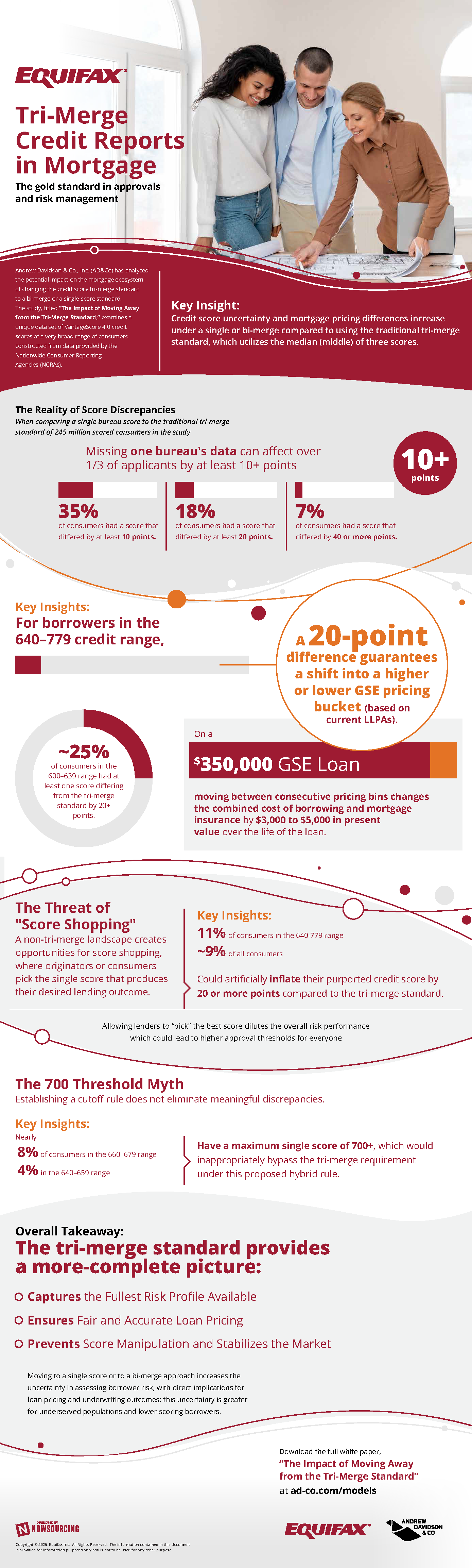
Many might believe that their credit scores are always accurate, but in reality, credit scores can vary depending on the amount and kind of information used to calculate them. In mortgage lending, even modest score changes can have substantial consequences on financial opportunities and long-term costs.
The baseline tri-merge standard we use credit reports from the three top national credit bureaus and consolidate them into a “middle score” that is used to evaluate risk. This creates a more comprehensive understanding of a borrower’s financial history that prevents missing crucial data. This increases transparency of consistency of credit data, making it easier for lenders to determine the best mortgage price while protecting investor confidence.
Not all lenders report to every credit bureau, which means some credit behaviors may be absent on different reports depending on the specific data set reviewed. When information is incomplete, lenders face greater challenges when it comes to assessing borrower risk accurately. Using a broader approach to credit assessment that involves using multiple reporting channels helps reduce credit uncertainty while discouraging borrowers from searching for the best score. This means a more balanced representation of financial behavior can be achieved while limiting the impact of isolated discrepancies in credit reporting.
Source: Equifax