
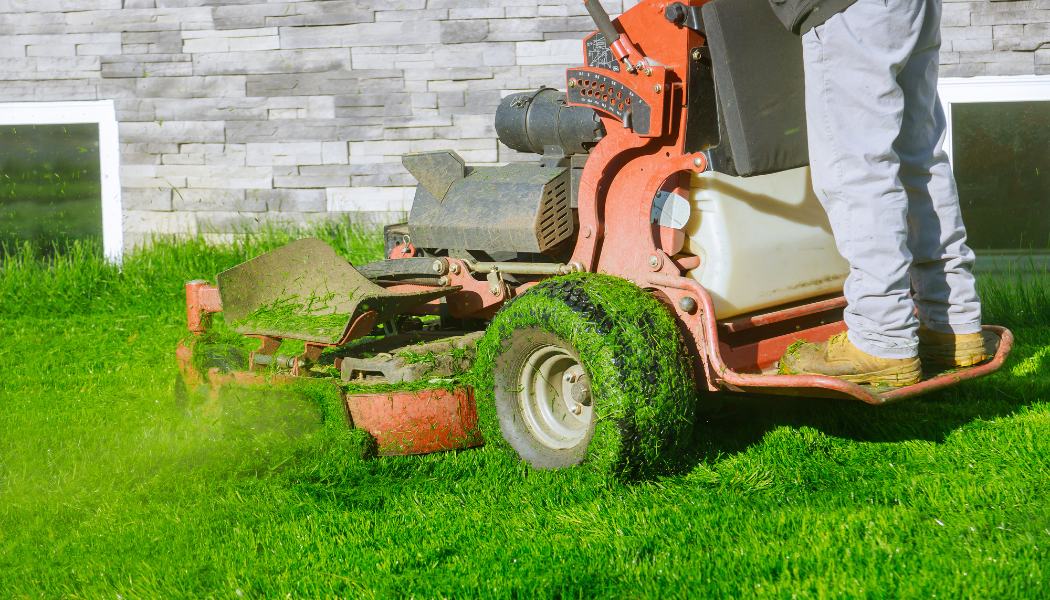
If you have spent any significant amount of time in the landscaping industry, you know the walk. It’s that stiff, slightly hunched shuffle that happens when a crew member climbs out of their truck at the end of a twelve-hour shift. It’s the universal sign of a lower back that has been rattled, compressed, and abused by a day on rough terrain.
For years, the industry standard for commercial cutting was the sit-down zero-turn. It made sense on paper: why stand when you can sit? We equated sitting with resting, but anyone who has driven a zero-turn across a rutted field at 8 miles per hour knows that sitting is definitely not resting. It is closer to riding a jackhammer.
The industry is currently seeing a massive migration toward the stand-on mower, and it isn’t just because they take up less space on a trailer. It is because veteran landscapers are realizing that to survive in this business for decades without destroying their bodies, they need to get out of the chair.
Here is the physiological breakdown of why standing up is actually the best way to save your back.
The Physics of Spinal Compression
To understand why your back hurts after a day in a seat, you have to look at the physics of the spine. When you are sitting in a bucket seat, your spine is stacked in a rigid column. Your pelvis is locked into the cushion. When the rear wheels of the mower hit a tree root or a pothole, that energy has to go somewhere. Because your legs are out in front of you and your butt is planted, the shockwave travels vertically—straight up the wheels, through the frame, into the seat, and directly into your tailbone. Your vertebrae are forced to absorb 100% of that impact. Do that thousands of times a day, five days a week, and you have a recipe for herniated discs and chronic compression issues. Suspension seats help, but they are essentially just bandages on a structural problem.
Legs: Nature’s Suspension System
The genius of the stand-on mower is that it utilizes the most sophisticated suspension system ever created: the human knees. Think about how you would react if you were standing on a bus, and it suddenly hit a speed bump. You would instinctively bend your knees to absorb the shock. You wouldn’t lock your legs straight, and you certainly wouldn’t want to be sitting on a hard plastic bench directly over the wheel.
When you operate a stand-on unit, your feet are on a sprung platform, but your legs are doing the heavy lifting. As the machine undulates over uneven turf, your knees and hips flex naturally. Your upper body remains relatively level while your lower body handles the chaos underneath. This isolates your spine from the violence of the terrain. Instead of your vertebrae banging together with every bump, your quads and glutes take the load. You end the day feeling like you did a mild workout, rather than feeling like you were thrown down a flight of stairs.
The Bailout Factor and Mental Tension
Back pain isn’t just about physical impact; it’s also about tension. On a sit-down mower, particularly on steep hills or near water, there is a subconscious “pucker factor.” You are strapped in. If the machine starts to slide or tip, you are going for a ride. This anxiety causes you to tense your core and back muscles, holding your body rigid for hours at a time. That sustained tension leads to spasms and knots.
On a stand-on mower, you are untethered. If the machine gets into a sketchy situation, you can simply step off the back. Knowing that you have an instant “bailout” option allows your body to relax. You can shift your weight easily to counter-balance the machine on slopes, using your body as a lever rather than dead weight. This dynamic riding style keeps the blood flowing and prevents the muscle stiffness associated with being strapped into a chair.
The Mount and Dismount
Mowing isn’t just mowing. It is mowing for five minutes, then stopping to pick up a kid’s bicycle, then mowing for ten minutes, then stopping to move a downspout or pick up a fallen branch. On a sit-down machine, every obstacle requires a sequence:
- Disengage blades.
- Unbuckle (if you’re following rules).
- Pull the steering bars apart.
- Physically haul yourself up out of a low, deep bucket seat.
- Do the task.
- Climb back down and repeat.
That repetitive motion of squatting and twisting to get out of a low seat puts immense torque on the knees and the lower back. It is arguably harder on the body than the mowing itself. With a stand-on, the process is seamless. You simply step off. There is no climbing, no hoisting, and no twisting. You step off, move the branch, and step back on. The barrier to clearing debris is gone, which means you are more likely to actually clear the debris rather than running it over, and your back is spared the repetitive strain of fifty squats a day.
Neck Preservation
We often talk about the lower back (lumbar), but the landscaper slouch affects the neck (cervical spine) just as severely. On a traditional sit-down mower, the cutting deck is located several feet in front of your feet. To see the trim edge—to ensure you aren’t scalping the turf or hitting a flower bed—you have to lean forward and crane your neck downward. Holding your head in that forward-flexed position for 8 hours puts massive strain on the trapezius muscles and the upper spine.
On a stand-on mower, your geometry changes. You are standing almost directly over the rear wheels. Your height advantage gives you a bird’s-eye view of the cutting deck. You can see the front caster wheels and the trim side without leaning forward or twisting your neck. You can maintain a neutral spine position—head over shoulders, shoulders over hips—while still maintaining perfect control of the cut.
The Core Engagement Myth
There is a misconception that standing is tiring. While it is true that your legs might feel a bit tired for the first week of switching to a stand-on, your body adapts quickly. What you find is that standing engages your core muscles (abs and lower back) in a healthy, active way. Sitting causes the abdominal muscles to shut off and the glutes to go dormant (often called “glute amnesia”). When your core creates no stability, your spine takes the heat. Standing forces a low-level engagement of your stabilizer muscles. It keeps your metabolism slightly higher and your blood circulating, preventing that lethargic, stiff feeling that sets in after lunch on a sit-down machine.
Protect Your Back
If you are mowing flat football fields all day, a sit-down mower with a luxe suspension seat is fine, but the reality of residential and commercial landscaping is curbs, roots, ruts, and hills. Your back is the most valuable tool you own. Once it’s gone, your career is essentially over. Switching to a stand-on mower isn’t just about fitting more units on the trailer or looking cool; it’s about mechanical sympathy for your own skeleton. It allows you to float over the rough stuff so you can get up the next morning and do it all again.