
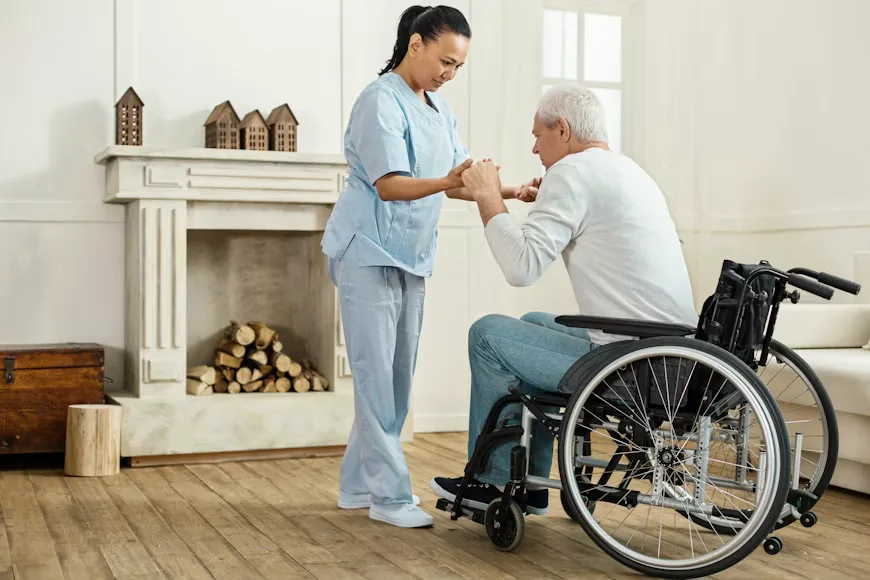
Photo By: Getty Images
Differently from other generations, Baby Boomers are starting to be more open to receive professional help while getting older, and this changes the game completely.
Not only do they accept that at-home care is a suitable alternative, but also, with this decision they expect more from their professional caregivers.
A New Shift On Independence
For Baby Boomers asking for help isn’t a sign of weakness anymore, in fact, Jim Prussak, CEO of Applause Homecare, an independent and family-owned home care agency providing exceptional care to Fair Lawn, Maplewood, and Northern New Jersey residents, explains how he perceives this changes:“Baby Boomers don’t necessarily view professional help as a sign of weakness or a loss of independence. Instead, they increasingly see it as a way to preserve their independence and quality of life,” he said. “We’re seeing a shift from simply asking, ‘How do we take care of our aging parents?’ to asking, ‘How do we help people continue living the lives they want to live as they age?’.”
Having these explanations makes us understand that this generation is being more conscious of the perks that asking for professional help can give you.
When patients realize they may need professional help instead of just the help of their loved ones, it might be scary to think that everything around them will change, but that isn’t necessarily true. When having at-home care, patients can still have their lives as they used to, they can have their social life continue, keep up their routines and have independence on their daily decisions while still maintaining their lives as they used to.
For some elders, having to go to an asylum or a medical facility may not be their option, that’s why, at-home care has grown significantly over the years. To keep up with patients daily routines while still having the professional quality of care they deserve.
What Role Does Technology Play In At Home Care
With technology changing the way companies work and services are delivered, it is normal to question how it is changing the way at home care works? For Jim Prussak the answer is easy:
“We’re seeing developments in passive monitoring, motion and activity sensors, smart home technology, medication reminders, and systems that can identify changes in someone’s normal daily routine.”
As he explained, “technology can help identify potential concerns, improve communication, and provide an additional layer of safety.”
Having technology help out the way in which patients are treated and how to keep them safe is a major improvement for at home care. This way, patients may even feel safer staying home and knowing that they are having the best treatment with advanced technology to dispose of.
A study made by JMIR – Advanced Digital Health and Open Science analyzes how technologies like remote monitoring systems such as motion sensors, cameras, and medication alerts, could help older adults maintain their independence while receiving home care.
These systems can actually notify caregivers and family members of unusual behaviour in the patients daily routines. It can also show potential falls or symptoms related to a medical emergency.
The findings of the study highlight the potential of technology as an additional tool in supporting aging at home.
The Overseen Perks Of Having A Professional Caregiver At Home
For some families, choosing to incorporate a professional caregiver can take more time than what’s actually recommended, and this may be due to some misconceptions families may have about bringing someone external into their home.
“Many families think home care is only necessary when someone becomes seriously ill or can no longer take care of themselves. That’s simply not the case. Home care can be introduced much earlier,” added Prussak. “It can be as simple as having someone help with errands, transportation, meal preparation, light housekeeping, or companionship. Sometimes a few hours of assistance can make an enormous difference in someone’s quality of life.”
Having someone that helps you out, even in the most “easy” tasks can have a huge impact on how family members manage their time and schedules, as well as reducing at-home care burnout for family members who used to be in charge of all the caregiving of their loved one.
People should investigate more on the matter, and understand that asking for a professional’s assistance is not just about having someone help out with a patient when the job it’s almost impossible for family members, but also about making everyone’s life easier and smoother so this way our loved ones can have professional help without having their family member sacrifice their daily lives.
A study made by Caregiving in the US shows how 64% of family caregivers report emotional stress that can lead to mental health problems, and 45% of them also report physical burnout.
This shows how dangerous for some family caregivers it may be not to have professional help with them, and how trying to do everything by themselves can have severe consequences.
Ultimately, accepting professional assistance does not mean giving up independence or family responsibilities, it means creating a support system that allows patients to continue living comfortably and families to remain involved without compromising their own well being.
As Baby Boomers continue to reshape expectations around aging, home care is becoming less about simply meeting basic needs and more about helping people maintain the lives they want to live.