
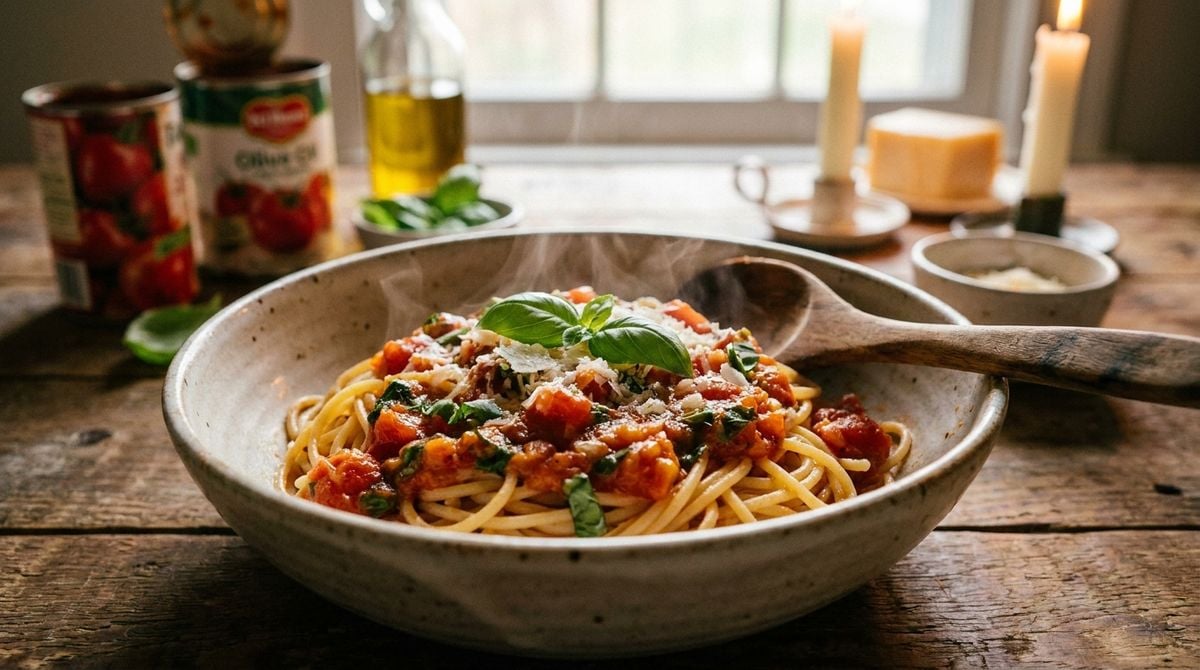
A pantry pasta meal is most useful when it feels intentional rather than like a collection of leftovers stirred into noodles. You need only a few roles: pasta, a flavorful base, something that provides body, a contrasting element, and a finishing touch. Thinking in roles makes it easier to cook from what you have without relying on one fixed recipe.
Take inventory before boiling water
Check open packages first. Look for pasta that needs using, jars already in the refrigerator, cooked vegetables, canned beans, frozen peas, or a small piece of cheese. Inspect every ingredient for spoilage and follow label directions for storage. A use-first shelf can make this scan quicker.
Choose ingredients that agree with one another. Strong olives, delicate peas, sweet roasted peppers, and smoky spices can all be good, but combining every bold flavor may produce confusion. Readers may also want to visit Morning Homestead.
Decide whether the sauce will be oil-based, tomato-based, creamy, or built from starchy pasta water. This determines what you prepare first. An oil-based sauce can begin while the water heats; a longer tomato sauce may need a head start.
Assign each ingredient a job
Use a short checklist to build the meal:
- Flavor base: onion, garlic, dried herbs, spices, or a savory paste.
- Body: beans, lentils, tinned fish, cooked vegetables, or ground nuts.
- Moisture: tomatoes, broth, dairy, cooking water, or oil.
- Contrast: greens, toasted crumbs, seeds, pickled vegetables, or citrus.
- Finish: fresh herbs, cheese, pepper, or a final drizzle of oil.
You do not need an item from every category, but the list prevents the dish from becoming dry or one-dimensional. If using canned foods, taste before adding extra salt. When allergies or dietary restrictions are involved, verify labels carefully and seek qualified advice if needed.
Set aside more of each ingredient than you think you will need only when it can be returned safely. You can also visit educity1713.com for more reading.
Cook the pasta and sauce together in spirit
Bring the cooking water to a steady boil and season it according to the needs of the whole dish. Stir the pasta soon after adding it and again as it softens. Before draining, reserve a mug of cooking water. Use a heat-safe cup and protect your hand from steam.
Meanwhile, cook the flavor base gently until aromatic. Add ingredients that need heating or softening, then introduce the main sauce component. Dense canned beans may need time to warm through; delicate greens can go in near the end. If using a ready-to-eat ingredient, avoid cooking it so long that its texture disappears.
Move the pasta into the sauce while it still has a little firmness. Add reserved water a splash at a time and toss over gentle heat. The starch helps oil and liquid form a coating rather than collecting separately. Stop adding water when the sauce clings to the noodles; a puddle is not the goal.
Taste, finish, and save leftovers safely
Taste for salt, acidity, heat, and texture. A squeeze of citrus or a little vinegar can wake up a flat sauce. Toasted crumbs or seeds add crunch when the meal is otherwise soft. If the sauce seems heavy, loosen it with cooking water rather than pouring in more fat.
Serve promptly because pasta continues absorbing liquid. Add delicate finishes at the table so they remain fresh. For a related read on this site, see Sleep Likes a Runway: Winding Down So the.
Cool leftovers promptly and refrigerate them in a clean, covered container. Reheat only the portion needed, adding a spoonful of water if the pasta has tightened. Use food-safety guidance appropriate to your location and ingredients.
A good pantry pasta is not defined by a long ingredient list. It succeeds because each ingredient has a purpose and the pasta finishes in the sauce. Inventory first, choose a clear direction, reserve cooking water, and adjust at the end. That method turns ordinary shelf ingredients into a dependable meal.
To make the method easier on busy evenings, keep a short list of combinations your household already liked. Record the pasta shape, main pantry item, vegetable, and finishing contrast. The list is not another rigid meal plan; it is a reminder that a useful dinner can begin with four compatible choices and one pot of cooking water.