
Ordering food for a group sounds simple until you become responsible for making sure everyone has enough to eat, the menu accommodates different preferences, and everything arrives on time. Whether you are organizing an office lunch, hosting a family celebration, planning a birthday party, or coordinating a gathering with friends, feeding several people requires more planning than ordering a meal for yourself.
Chicago offers a wide range of food options for group dining, from Italian classics and deep-dish pizza to Mediterranean platters, barbecue, sandwiches, and Asian-inspired dishes. That variety makes it easier to find something everyone will enjoy, but it can also make choosing a menu more complicated. Add delivery windows, dietary restrictions, serving supplies, and a budget, and the process can quickly become overwhelming.
The good news is that group food orders do not need to be stressful. With a realistic headcount, a suitable menu, a clear budget, and a reliable delivery plan, you can organize a meal that feels effortless for everyone involved.
Start With the Group Size and Event Details
Before comparing menus or contacting restaurants, establish the basic details of your event. Knowing how many people you are feeding, when the food is needed, and where it will be served makes every other decision easier.
Confirm Your Headcount Early
Your guest count determines how much food to order, how many trays or individual meals you need, and how much you can spend per person. Start with the most accurate number available, then ask attendees to confirm whether they will be present.
For a workplace meeting, check the calendar invitation or ask the event organizer for an updated attendance list. For a birthday party or family gathering, set a response deadline so you are not estimating the number of guests at the last minute.
If the final count is uncertain, ask the caterer how late you can make adjustments. Some providers allow changes within a specified period, while others require a confirmed quantity several days before the event.
It is usually better to plan around a realistic headcount than to order excessive food as a precaution. A small buffer may be useful for informal gatherings, but the right amount depends on the menu, the length of the event, and whether other food will be available.
Identify the Type of Gathering
The purpose of the event affects what kind of meal will work best.
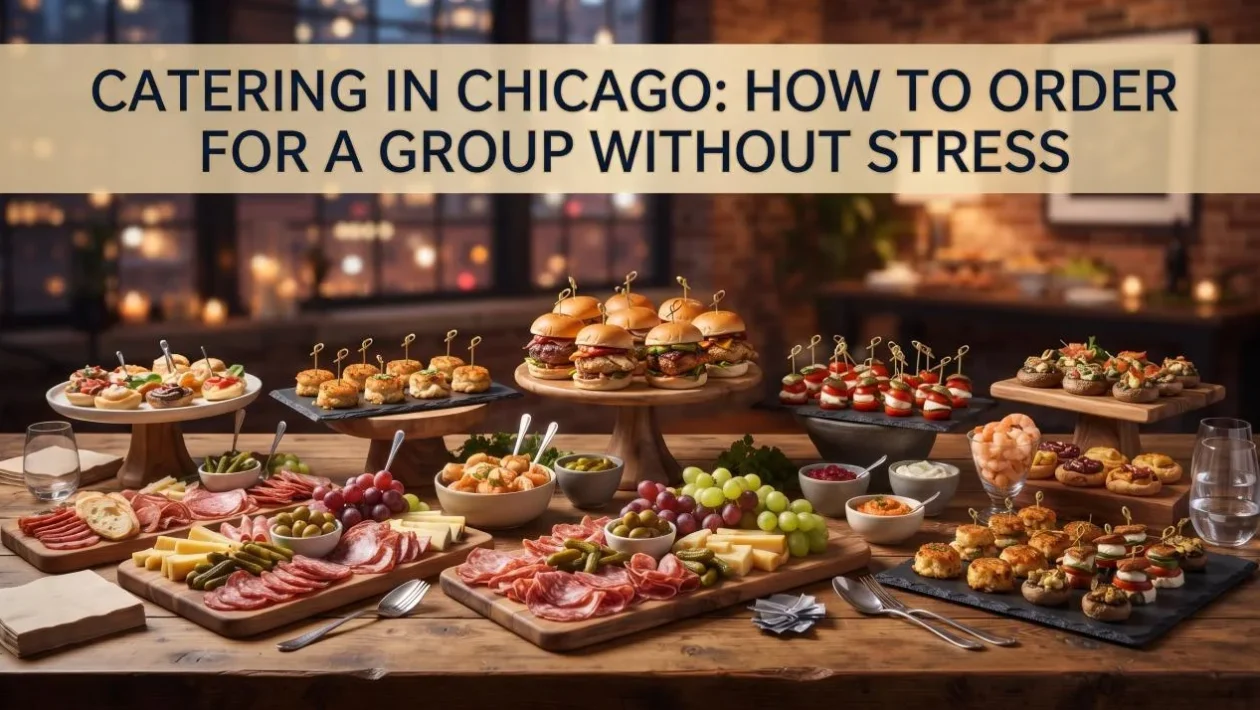
A business meeting may call for individual boxed lunches that are easy to distribute and eat without interrupting the schedule. A family celebration might benefit from shared platters that encourage conversation. A networking event may need finger foods that guests can enjoy while standing and moving around.
Think about how people will eat, not just what they will eat. If guests will be seated at tables, buffet trays may work well. If they will be moving between presentations or conversations, individually packaged meals may be more convenient.
Also consider the time of day. A morning meeting may require pastries, fruit, and coffee rather than a full lunch. An evening gathering may need more substantial portions, especially if the event overlaps with dinner.
Choose a Menu That Works for Different Preferences
One of the biggest challenges when ordering for a group is finding food that appeals to different tastes. Some guests may prefer vegetarian dishes, while others want meat, spicy flavors, or familiar comfort food. The objective is not to create a separate menu for every person. It is to offer enough variety to make the meal accessible and enjoyable.
Select a Flexible Main Menu
Start with a main food category that suits the event. Sandwiches, pasta, grain bowls, tacos, Mediterranean platters, and mixed appetizer trays can all work well for group orders.
A flexible menu allows guests to choose combinations that suit their preferences. For example, a Mediterranean spread might include grilled chicken, falafel, hummus, rice, vegetables, and pita. A sandwich order could offer meat, vegetarian, and lighter options alongside salads or fruit.
When comparing catering chicago options, look beyond the number of dishes advertised. Consider whether the available combinations are practical for your group, whether portions are clearly described, and whether the provider can accommodate your event format.
A menu with a few well-chosen options is often easier to manage than an extensive selection of unrelated dishes. Too many choices can complicate ordering, increase costs, and make it harder to estimate quantities.
Include Vegetarian and Vegan Options
Dietary preferences should be considered early rather than treated as last-minute exceptions. Ask attendees whether they have specific needs, then identify menu items that provide meaningful alternatives.
Vegetarian dishes might include vegetable pasta, salads, cheese sandwiches, or meat-free grain bowls. Vegan options may include vegetable platters, bean-based dishes, hummus, or plant-based entrees, depending on the caterer’s menu.
Do not assume that a dish is vegetarian or vegan based on its name alone. Sauces, broths, dressings, and preparation methods can contain animal-derived ingredients. Confirm the details with the provider when necessary.
If only a few guests require a special meal, individually labeled portions may be easier to distribute than a separate buffet section. For larger groups, a clearly organized selection of plant-based dishes can simplify the entire order.
Account for Allergies and Food Sensitivities
Food allergies require more careful planning than ordinary preferences. Ask guests to communicate any allergies before placing the order, and share the information directly with the caterer.
Request clear ingredient information and ask about cross-contact procedures if a guest has a serious allergy. A restaurant may be able to prepare a suitable dish, but not every kitchen can guarantee that an item is free from a particular allergen.
Keep labels or packaging information available when the food arrives. Do not rely solely on appearance to identify a meal, and avoid transferring dishes between containers if doing so could create confusion.
For workplace events, it is helpful to provide a clear method for communicating dietary requirements privately. This gives attendees a chance to share important information without feeling uncomfortable in front of the entire group.
Set a Budget Before You Compare Providers
A clear budget makes it easier to narrow down menu choices and prevents unexpected expenses. However, the listed price per person is only one part of the total cost.
Calculate the Full Cost
Before approving an order, determine what the final bill is likely to include. Depending on the provider, additional charges may include delivery, service fees, taxes, gratuity, equipment rental, or setup.
For example, a menu advertised at a particular per-person rate may appear affordable until delivery and other charges are added. Another provider may have a slightly higher food price but include serving utensils or delivery within the quoted amount.
Request an itemized estimate whenever possible. It should explain the food quantities, any additional fees, and the total expected cost.
If you have a fixed budget, tell the caterer the amount you need to stay within. A provider may be able to suggest different combinations, adjust the menu, or recommend dishes that offer good value for a group.
Match the Menu to the Occasion
Not every event needs an elaborate spread. A short office meeting may be well served by sandwiches, fruit, and drinks. A graduation celebration or milestone birthday might call for a broader menu with appetizers, main dishes, and desserts.
Consider what guests will expect based on the time and duration of the event. If the gathering lasts only an hour and takes place between meals, lighter refreshments may be enough. If it covers an entire evening, more substantial food may be appropriate.
Avoid spending too much on decorative extras before confirming that the basic meal is sufficient. Prioritize appropriate portions, food quality, and reliable delivery, then decide whether additional items fit the remaining budget.
Understand Portions and Food Quantities
Estimating food quantities can be difficult, especially when guests have different appetites or the menu includes many shared dishes. The safest approach is to use the caterer’s serving guidance rather than assuming every tray feeds the same number of people.
Ask How Many People Each Tray Serves
Menu descriptions sometimes use terms such as small, medium, large, or family size without explaining the number of servings. Ask the provider for a realistic estimate based on the dishes you are ordering.
A tray of pasta may serve a different number of people when it is the main course than when it is one of several buffet options. The same applies to appetizers, salads, and side dishes.
When ordering multiple entrees, clarify whether the serving estimates assume that every guest will take a portion of each item. If the menu includes several rich dishes, guests may take smaller amounts of each. If there are only one or two main options, portions may need to be more generous.
Consider the Length of the Event
The amount of food required depends on more than attendance. A brief lunch break has different needs from a three-hour celebration.
For a short meal, a main dish and one side may be sufficient. For a longer event, guests may appreciate additional sides, snacks, or dessert. If the event spans a typical mealtime, plan for a complete meal rather than assuming appetizers will satisfy everyone.
You should also consider whether guests will arrive all at once or throughout the event. Staggered attendance can complicate serving and food-temperature management, particularly when the meal is set out buffet-style.
Avoid Ordering Too Much
Ordering extra food can provide reassurance, but excessive quantities increase costs and may result in significant waste. Start with the confirmed guest count and the caterer’s recommended servings, then add a modest buffer if the event calls for it.
If leftovers are likely, plan how they will be stored safely. Ask whether containers will be provided and make sure someone is responsible for refrigerating perishable items promptly.
Choose the Right Ordering and Delivery Timeline
Timing is one of the most important parts of a successful group order. Even an excellent menu can cause problems if the food arrives too early, too late, or without enough time for setup.
Order Earlier for Large Events
For a small office lunch, a provider may accept orders with relatively little advance notice. Larger gatherings, specialized menus, and busy dates often require more planning.
As a general starting point, contact providers several days ahead for straightforward group orders. For large celebrations, extensive customization, or major events, begin the process weeks in advance when possible. The ideal lead time varies by restaurant, season, and event size.
Confirm the order deadline, payment requirements, and the latest time you can change the headcount. Do not assume that a menu available for regular online ordering is also available for a large event at short notice.
Schedule Delivery With a Buffer
If food must be ready at noon, consider requesting delivery early enough to allow for unloading, checking the order, and arranging the serving area. The appropriate buffer depends on the event location, traffic, and how much setup is required.
Chicago traffic can be unpredictable, particularly during peak commuting hours or when an event takes place in a busy downtown building. Give the provider clear delivery instructions, including the building entrance, floor, suite number, loading area, or reception procedure.
For offices with security desks or restricted access, tell the caterer exactly where the driver should go. If someone needs to meet the delivery, confirm who will be available and provide a working contact number.
Confirm the Order Before the Event
A quick confirmation can prevent avoidable mistakes. Recheck the date, delivery time, address, guest count, menu selections, dietary notes, and payment status.
For a large order, ask whether the provider will contact you when the food is dispatched. Make sure you know what to do if the delivery is delayed or an item is missing.
Keep the order confirmation accessible on the day of the event. It makes it easier to verify quantities and resolve discrepancies without searching through old messages.
Decide Between Individual Meals and Shared Platters
The way food is packaged affects convenience, presentation, and how smoothly the meal runs.
Individual Boxed Meals
Boxed meals are useful for meetings, training sessions, conferences, and other gatherings where people need to eat at their own seats. Each meal can include a main dish, a side, and sometimes a dessert or drink.
Individual packaging also makes distribution easier and may help keep dietary orders separate. Make sure every box is clearly labeled, particularly when meals have been customized for allergies or dietary requirements.
The main drawback is that boxed meals may offer less flexibility than a shared spread. They can also generate more packaging waste, depending on the materials used.
Buffet-Style Catering
Buffets work well for family celebrations, office parties, and gatherings where people can serve themselves. Guests can choose their preferred combinations, and the host can arrange dishes in a central location.
However, buffets require sufficient table space, serving utensils, labels, and a plan for keeping hot foods hot and cold foods cold. You should also account for the time needed to arrange the food before guests arrive.
If the venue is small, check whether trays and serving equipment will fit comfortably. A simple layout with clear labels can make a buffet easier to navigate and reduce crowding.
Shared Platters and Appetizers
Shared platters can encourage conversation and are often suitable for informal gatherings. Sandwich assortments, salads, wraps, vegetable trays, and appetizers can be placed across several tables so guests can access them easily.
The main challenge is portion planning. Confirm the number of servings and whether the dishes are intended as snacks or a complete meal. If the event overlaps with lunch or dinner, make sure the selection is substantial enough.
Prepare the Serving Space Before Food Arrives
A smooth catering experience depends on the environment as much as the menu. Even a modest order can feel disorganized if there is nowhere to place the trays or no one knows where to collect their meal.
Before delivery, clear a suitable table or counter and make sure the serving area is accessible. Arrange plates, napkins, cutlery, cups, and trash or recycling containers if they are needed.
For a buffet, place plates at the beginning of the serving line and organize dishes in a logical order. Keep drinks and desserts in separate areas if doing so will prevent congestion.
If the event takes place in an office conference room, confirm whether outside food is permitted and whether the venue has rules about cleanup. For a rented event space, ask what tables, refrigeration, and serving equipment are included.
Food safety also matters. Perishable foods should not sit at room temperature for extended periods. Use appropriate insulated containers, chafing equipment, or refrigeration as needed, and follow the caterer’s handling instructions.
Common Catering Mistakes to Avoid
A little preparation can prevent the problems that most often disrupt group meals.
- Waiting too long to order: Popular dates and larger orders may require advance notice.
- Guessing the portions: Ask the provider how many people each tray or package is expected to serve.
- Ignoring dietary needs: Gather requirements early and communicate them clearly.
- Forgetting delivery details: Provide accurate access instructions and a day-of-event contact.
- Overlooking extra fees: Confirm the full cost, including delivery and service charges.
- Choosing food that does not suit the setting: Consider whether guests will be seated, standing, or eating between activities.
- Failing to plan for cleanup: Arrange containers, trash collection, and leftover storage before the meal begins.
The key is to make decisions in the right order. Confirm the event details, settle on the budget, choose the menu, verify quantities, and then coordinate delivery and setup.
FAQs
How far in advance should I order catering in Chicago?
For a straightforward group meal, start contacting providers several days in advance. Larger events, custom menus, and busy dates may require several weeks of planning. Confirm the provider’s actual ordering deadline before relying on a specific timeline.
What is the easiest food to order for a large group?
Sandwiches, boxed lunches, pasta trays, wraps, Mediterranean platters, and mixed appetizer selections are common choices because they can be portioned or shared easily. The best option depends on the event format, dietary needs, and available serving space.
How do I calculate how much food to order?
Start with the confirmed headcount and ask the caterer how many people each item serves. Consider whether the food is a complete meal or part of a larger spread, how long the event lasts, and whether guests will have access to additional refreshments.
Should I choose boxed meals or a buffet?
Boxed meals are convenient when guests need individual portions or have different dietary requirements. Buffets offer more flexibility and variety but require serving space and a plan for food safety. Choose the format that best fits the venue and schedule.
What should I tell a caterer about food allergies?
Share the specific allergy and ask whether the provider can accommodate it safely. Confirm ingredient information and cross-contact procedures rather than relying on assumptions. If the kitchen cannot safely meet the requirement, arrange a suitable alternative.
How can I avoid unexpected catering costs?
Request an itemized quote that includes food, delivery, taxes, service fees, gratuity where applicable, and any equipment or setup charges. Confirm the payment schedule and ask whether changing the headcount affects the price.
Can catering be delivered to a downtown Chicago office?
Many providers serve office locations, but access arrangements vary. Give the caterer the complete address, suite or floor information, building-entry instructions, and a contact person. Confirm any loading, parking, or security requirements in advance.
Conclusion
Ordering food for a group in Chicago becomes much easier when you approach it as a series of manageable decisions. Start by confirming the headcount and event details, then select a menu that suits the occasion, accommodates dietary needs, and fits the budget. Verify serving quantities, review the full cost, and establish a delivery schedule that leaves enough time for setup.
The right catering arrangement should make the event more enjoyable, not create extra work for the host. By communicating clearly with the provider and planning for the practical details, you can serve a meal that feels organized and welcoming. Whether you are coordinating a team lunch, a birthday celebration, or a larger gathering, a little preparation helps everyone spend less time worrying about the food and more time enjoying the occasion.